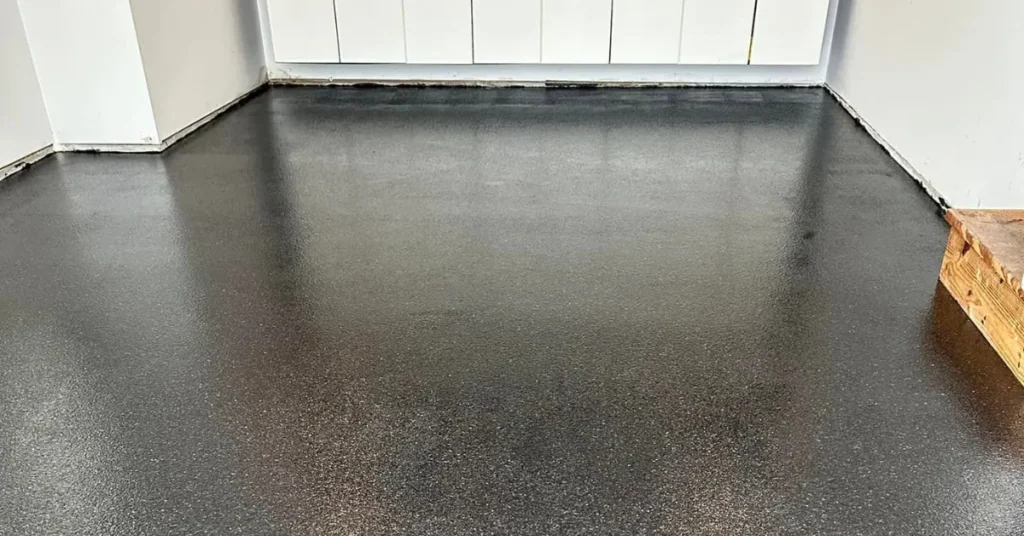
The floor looks great in the photos. The price sounds reasonable. The contractor seems confident. So you hire them, and two years later you’re looking at a floor that is peeling, bubbling, and embarrassing.
This happens more than it should in the epoxy industry. The barrier to entry is low. Anyone can buy a bucket of epoxy and call themselves a flooring contractor. But not everyone knows how to properly prepare a surface, work within a chemical window, or install a floor that actually lasts.
Choosing the right epoxy flooring contractor is one of the most important decisions in the process. This guide walks you through exactly what to look for and what to ask before you sign anything.
Ask About the Coating System They Use
Not all epoxy floors are built the same. A professional installer should be able to tell you exactly what products they use, what the base coat is, and what the top coat is. If they can’t answer that clearly, that’s a problem.
The best residential systems combine an epoxy base coat with a polyaspartic top coat. The epoxy creates a strong bond to the concrete and provides moisture resistance. The polyaspartic top coat adds UV stability and scratch resistance.
If a contractor is selling you a single-product epoxy kit that doubles as both base and top, ask more questions. Professional-grade systems use two distinct layers for a reason. Each layer has a specific job, and a one-coat solution typically cuts corners on either durability or appearance.
Ask About Surface Preparation
Surface prep is the foundation of every epoxy installation. It is also where the biggest differences between professional installers and poor-quality crews show up.
A professional will use commercial-grade diamond grinders to profile the concrete. This opens up the surface so the coating can bond deeply. They should also test the hardness of the concrete before they start, because different hardness levels require different diamond configurations.
Ask directly: how do you prepare the surface? If the answer is acid etching or a quick sand, walk away. Acid etching is a dated method that does not create the same bond strength as mechanical grinding. A crew that is not willing to invest in proper prep is not willing to invest in a floor that lasts.
They should also perform a moisture test. If moisture is present in the concrete at levels the base coat cannot handle, an additional moisture vapor barrier may be required. Skipping this step is one of the most common causes of long-term floor failure.
Look at Their Work, Not Just the Photos
Before and after photos on a website or Instagram are helpful but they only show you the best examples. Ask the contractor if they have any local references you can contact. Better yet, ask if you can see a recently completed job in person.
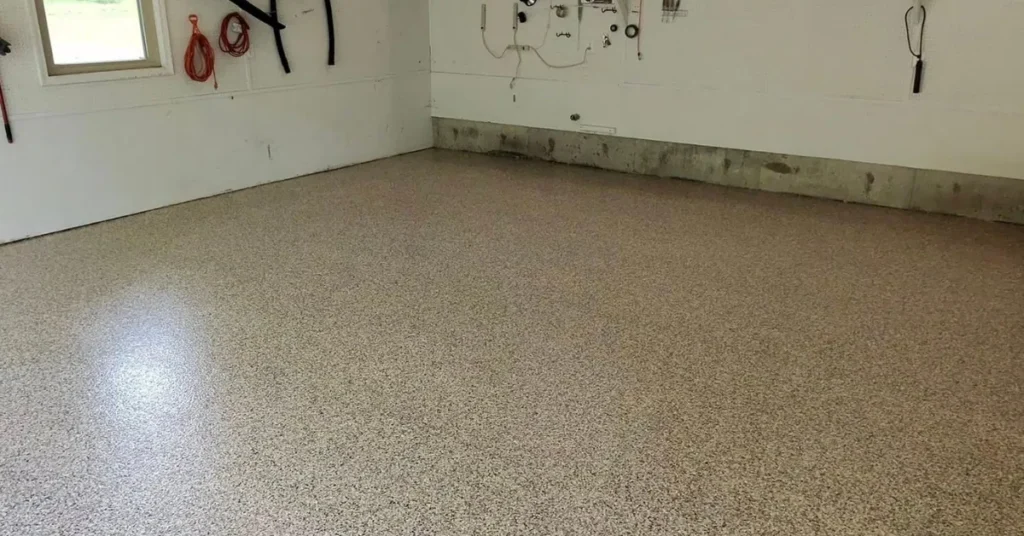
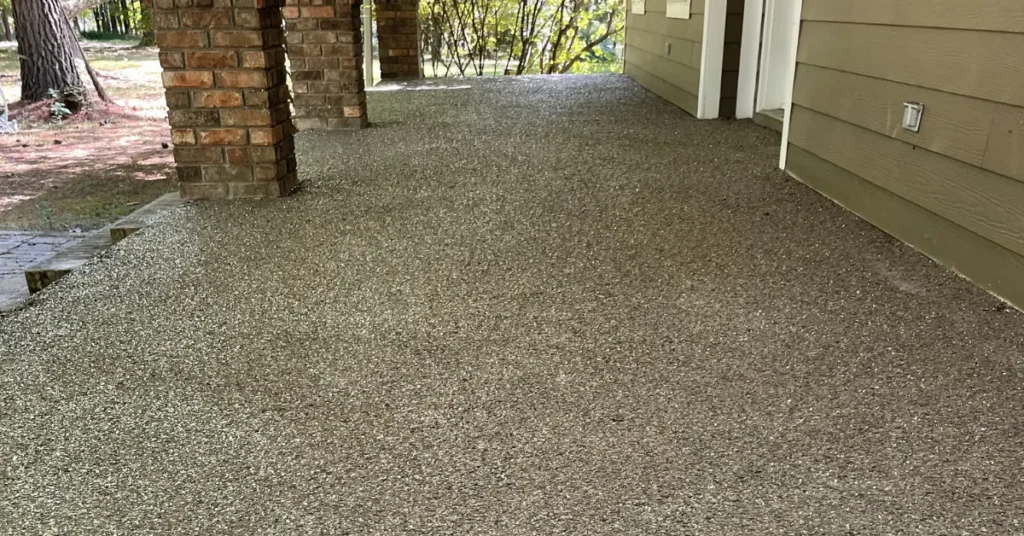
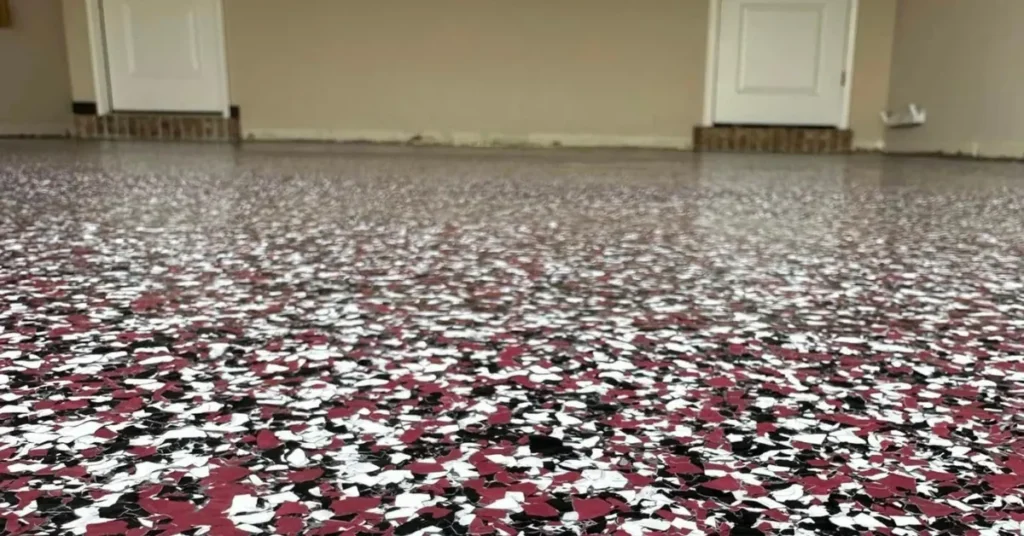
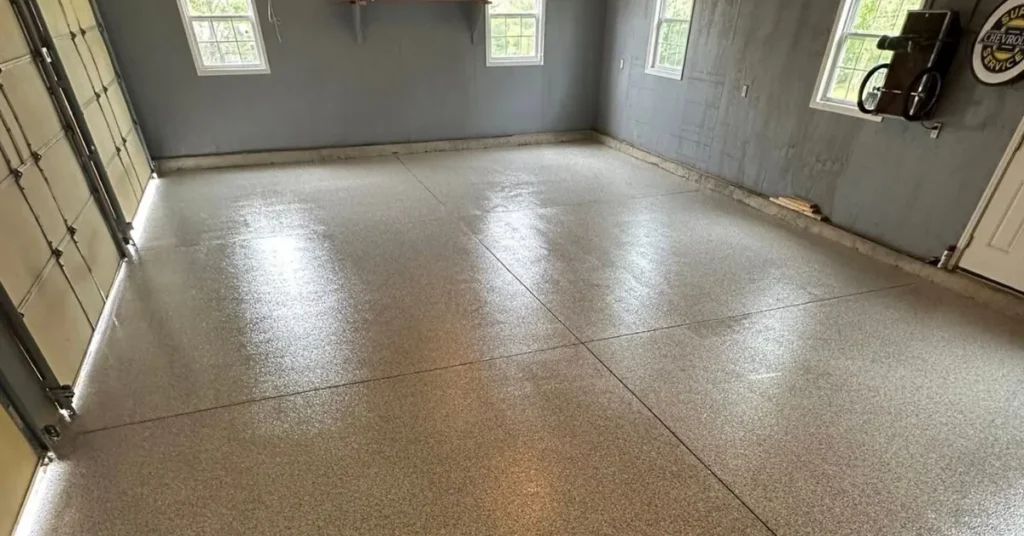
When you see the floor in person, look for uniformity. A quality installation should look completely seamless from one end to the other. Look for these red flags:
- Uneven flake coverage or areas where the base coat is visible through the chips
- Roller marks in the top coat
- Visible lines or seams where sections of the floor were applied separately
- Coating that bled onto walls, baseboards, or adjacent surfaces
- Any variation in color or texture across the floor
A professional floor should look like one continuous surface. If you can see where the crew started and stopped, or where two sections meet, the work was not done at a professional level.
Ask About Their Timeline and Process
A legitimate contractor should be able to walk you through their process start to finish. Ask them how long the job takes, what you need to do to prepare, and when you can walk and drive on the floor after installation.
Modern epoxy and polyaspartic systems can be completed in a single day. Most polyaspartic-finished floors are walk-on ready in 24 hours and vehicle-ready in 72 hours. If a contractor is telling you the job takes three or four days for a standard garage, ask why.
You should also ask what you need to do before they arrive. A professional crew will typically ask you to clear the space at least 12 hours before the job, remove dust-sensitive items, and keep vehicles off the floor the night before.
Understand What a Warranty Does and Does Not Cover
Warranty language in the epoxy industry varies widely. Some contractors offer one year. Others offer five, ten, or more. Some offer lifetime warranties.
The most important thing to understand is what the warranty actually covers. Most warranties in this industry protect against delamination, which is the coating peeling or separating from the concrete. Ask your contractor specifically what their warranty covers and get it in writing.
A longer warranty is typically a sign that the installer is confident in their process and materials. A contractor who offers a short warranty and moves on quickly is not as invested in the quality of the work they leave behind.
Price Is Not the Only Variable
The cheapest quote is rarely the best value. In the epoxy industry, low prices often mean lower-quality products, less thorough prep work, or crews that rush through the job.
That said, price should make sense relative to the scope of work. If someone is pricing a two-car garage significantly below every other quote you receive, ask why. Understand exactly what is included in the price and what products are being used.
The floor you are investing in should last for years. A few hundred dollars saved upfront can cost you significantly more in remediation or reinstallation if the job is done poorly.
Red Flags to Watch For
- No clear answer on what coating products they use
- Acid etching instead of diamond grinding for surface prep
- No moisture testing process
- Pressure to sign quickly or lock in a discounted price today
- No local references or real job photos
- Vague warranty language or no warranty at all
- Very low pricing with no explanation
- Crew that cannot explain the installation process clearly
Why Cutting Edge Epoxy
Cutting Edge Epoxy is based in Cape Girardeau, Missouri. Every job starts with commercial-grade diamond grinding and a proper concrete assessment. The coating system used is an epoxy base coat with a polyaspartic top coat, installed in a single day in most cases.
Every installation is done with the right materials, the right tools, and the attention to detail that separates a floor that lasts from one that doesn’t. From the first grind to the final top coat, the process is professional at every step.
Get a FREE quote from Cutting Edge Epoxy. No pressure, no guesswork. Just honest pricing and real results.
FAQ’s
How many quotes should I get before choosing a contractor?
Getting two to three quotes is a reasonable approach. More important than the number of quotes is what you are comparing. Make sure you understand exactly what products and process each contractor is proposing before comparing prices.
Should I ask to see past work?
Yes. Ask for local references and, if possible, ask to see a recently completed job. Photos on a website are a starting point, but seeing a real floor in person tells you a lot more about the quality of the work.
Is a one-day installation a sign of cutting corners?
Not at all. Modern epoxy and polyaspartic products are designed for one-day installation. A professionally executed one-day install produces a floor that holds up just as well as a two-day system. The quality of the prep and execution matters far more than the number of days spent on the job.
What happens if my floor starts peeling after installation?
If your floor begins to delaminate within the warranty period, contact your contractor immediately. A reputable installer will stand behind their work. This is why getting warranty terms in writing before the job starts is important.
Does it matter if the contractor is local?
It can. A local contractor has a reputation to protect in the community. They are also more accessible if any follow-up is needed after installation. Companies that travel from out of town for a single job may be harder to reach if issues come up later.
Ready to get started? Contact Cutting Edge Epoxy for your free estimate today.