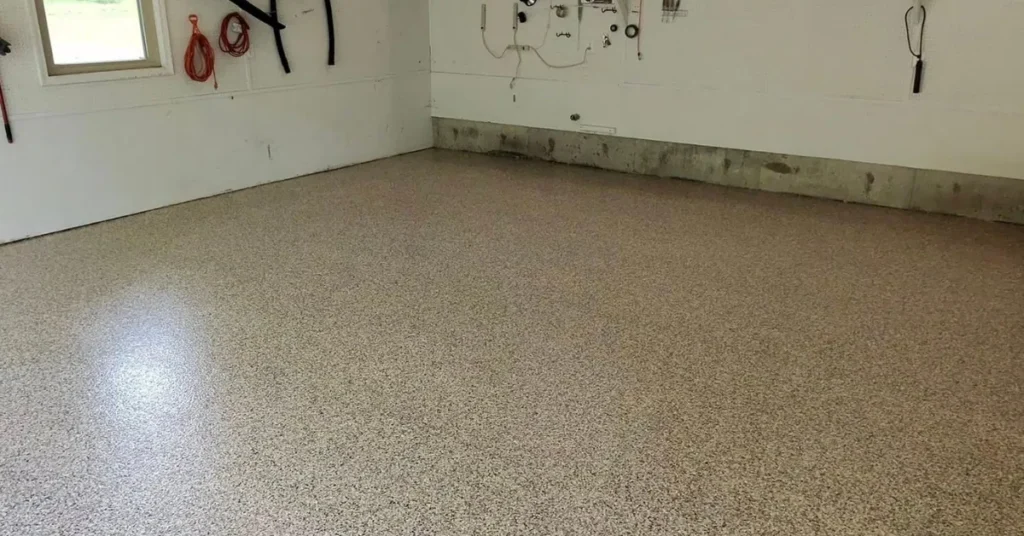
One of the best things about a professionally installed epoxy garage floor is how easy it is to maintain. The non-porous surface does not absorb dirt, dust, or spills the way bare concrete does. This means cleaning is faster, easier, and more effective.
That said, there are right ways and wrong ways to clean an epoxy floor. This guide covers exactly what to do for routine maintenance, how to handle tough stains, and what products and habits to avoid.
Routine Cleaning: What You Need to Know
For everyday dirt, dust, and debris, sweeping or blowing the floor with a leaf blower is enough. The non-porous surface does not trap dirt the way concrete does, so a quick sweep keeps the floor looking clean between more thorough cleanings.
For a more thorough clean, rinse the floor with water. A garden hose or bucket of water and a squeegee is often all that’s needed to clean a floor that sees moderate foot traffic and normal garage use.
A mop with warm water works well for regular washing. You do not need specialty cleaners for routine maintenance.
Cleaning Oil, Grease, and Garage Fluids
This is where epoxy flooring really earns its value over bare concrete. Oil, grease, coolant, and other garage fluids that would permanently stain bare concrete simply sit on the surface of an epoxy floor.
Clean up oil and grease spills as follows:
- Apply a degreaser or household cleaner to the affected area
- Let it sit for about 10 minutes
- Agitate with a soft brush or mop if needed
- Wipe or squeegee the area clean
- Rinse with water
Recommended cleaners for epoxy floors include Simple Green, Pine-Sol, Dawn dish soap, or Miracle Spirits. These are effective, accessible, and safe for use on a polyaspartic-coated surface.
Handling Tougher Stains
For stains that have dried or been on the floor for an extended period, the same process applies but may require more soak time. Apply the cleaner, let it work for 10 to 15 minutes, scrub gently, and rinse.
A soft-bristle brush or nylon scrubbing pad works well for tougher stains. Avoid steel wool or metal scrubbers, as these can scratch the polyaspartic top coat.
For very stubborn stains, a second application of cleaner after rinsing the first often finishes the job.
What to Avoid
There are a few things that can damage an epoxy floor over time:
- Battery acids and highly corrosive chemicals: clean these up immediately and do not allow them to sit on the surface
- Steel wool or metal scrubbing pads: these scratch the polyaspartic top coat
- Harsh abrasive cleaners: avoid powdered cleansers or anything with grit that could damage the surface
- Soap-based cleaners used in excessive amounts: heavy soap residue can leave a haze on the floor over time
- Citrus-based cleaners or certain industrial solvents: these can sometimes break down the top coat with repeated use
Seasonal Cleaning
After Missouri winters, salt and road chemicals tracked in from vehicles can build up on the floor surface. Rinse the floor thoroughly at the end of winter to remove these residues. Road salt left on the floor over time can dull the appearance of the top coat.
Spring and fall are good times for a more thorough clean using a degreaser and a mop to refresh the whole floor and maintain its appearance heading into the next season.
Maintaining the Floor Long-Term
Basic maintenance habits extend the life and appearance of an epoxy floor significantly:
- Sweep or rinse regularly to remove abrasive debris that can scratch the top coat over time
- Clean up spills promptly, especially oils, chemicals, and acidic substances
- Avoid dragging sharp or very heavy objects directly across the floor
- Place protective pads under heavy equipment or storage shelving to prevent concentrated pressure marks
These are simple habits that require minimal time and effort. An epoxy floor that is maintained this way will look clean and perform well for many years.
FAQ’s
Can I use a pressure washer on my epoxy floor?
Low to moderate pressure washing is generally fine for outdoor epoxy and polyaspartic surfaces. For indoor garage floors, a hose rinse or mop is typically more than adequate and carries less risk of directing water into wall edges or baseboards.
How often should I mop my epoxy garage floor?
The frequency depends on how much the garage is used. A heavily used garage may benefit from a monthly mop. A garage with lighter traffic may only need it a few times a year. Sweep regularly in between.
Will cleaning products affect the color of the floor?
The cleaning products recommended, including Simple Green, Pine-Sol, and Dawn, are safe for use on polyaspartic-coated surfaces and will not affect the color. Avoid harsh industrial chemicals and abrasive products that are not intended for use on coated floors.
What is the best way to remove tire marks?
Tire marks from vehicles sitting on the floor for extended periods can sometimes leave marks on the surface. A degreaser applied and left to soak for 10 to 15 minutes, followed by scrubbing and rinsing, typically removes or significantly reduces tire marks.
Invest in a floor that’s easy to maintain. Contact Cutting Edge Epoxy for a FREE quote on your garage floor project.