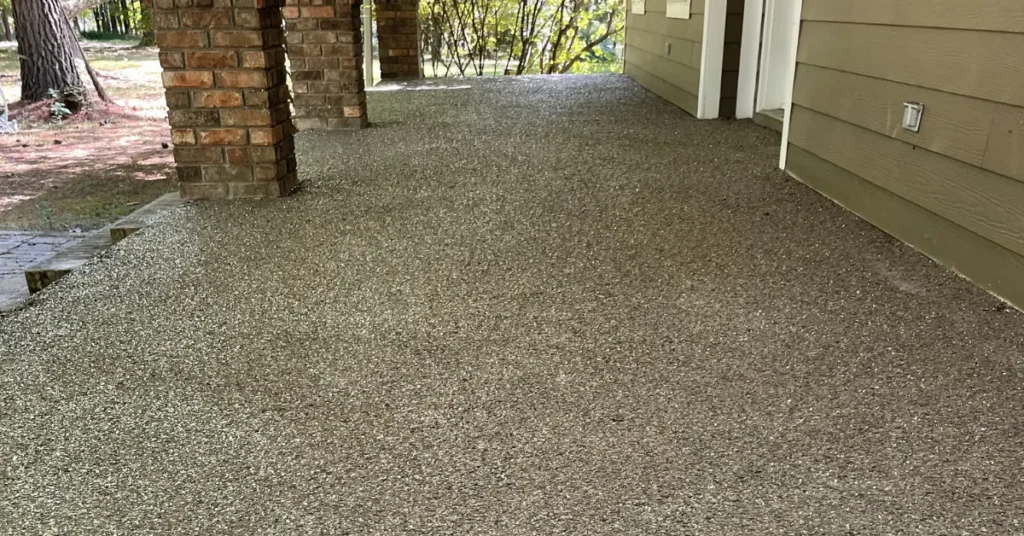
Patios, pool decks, and outdoor living areas are some of the most used spaces around a home. If you’re thinking about upgrading the concrete in these areas, the same coating technology used on garage floors is a viable option. But outdoor surfaces have different requirements than indoor floors, and the system has to match those requirements.
The key is knowing which materials work outdoors and which do not. Get this right, and you end up with a beautiful, durable outdoor surface that holds up year after year. Get it wrong, and you end up with a floor that ambers, peels, or fails within a season or two.
Can You Use Epoxy on Outdoor Surfaces?
Epoxy as a base coat is not recommended for outdoor surfaces with direct sun exposure. This is not a debate in the professional installation community. Epoxy is not UV stable. Under consistent sunlight, epoxy ambers and changes color over time.
In an indoor garage, this is managed by the UV-stable polyaspartic top coat that protects the epoxy base from UV exposure. Outdoors, the sun hits from multiple angles and with much greater intensity over time. Even with a UV-stable top coat, an epoxy base coat on a patio or pool deck will eventually affect the appearance of the floor as the base coat ambers beneath the surface layers.
For outdoor surfaces, the right base coat is polyaspartic.
The Right System for Outdoor Surfaces
For patios, pool decks, driveways, and any outdoor concrete surface with UV exposure, the correct system is polyaspartic on both the base coat and the top coat.
Polyaspartic is UV stable throughout. Using it on both layers means the entire system, from bottom to top, resists UV degradation. The floor holds its color and appearance even under direct Missouri sun.
Polyaspartic also cures fast. This is a practical benefit for outdoor projects where the area needs to return to use quickly. Depending on the specific product, walk-on times can be as short as 4 to 6 hours.
Patios: What to Expect
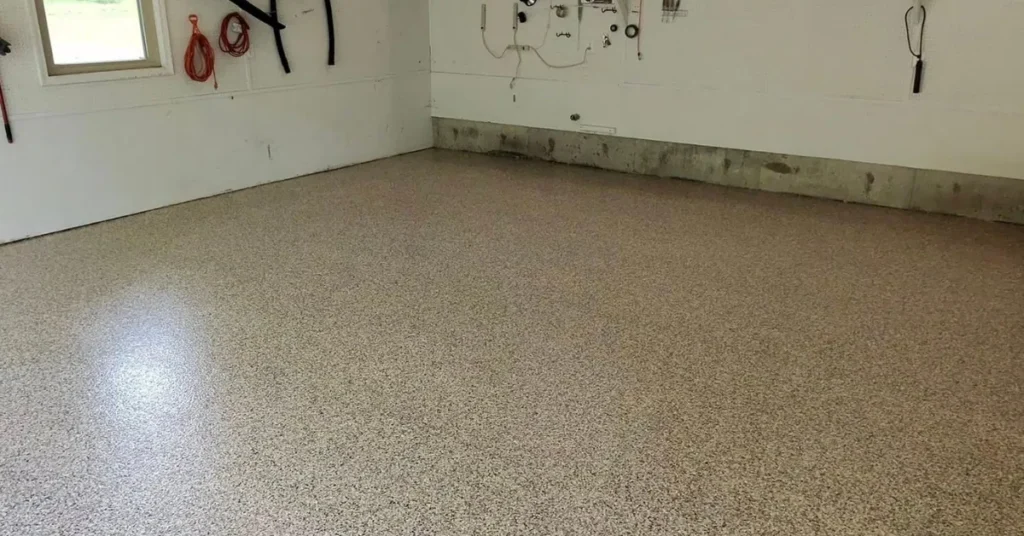
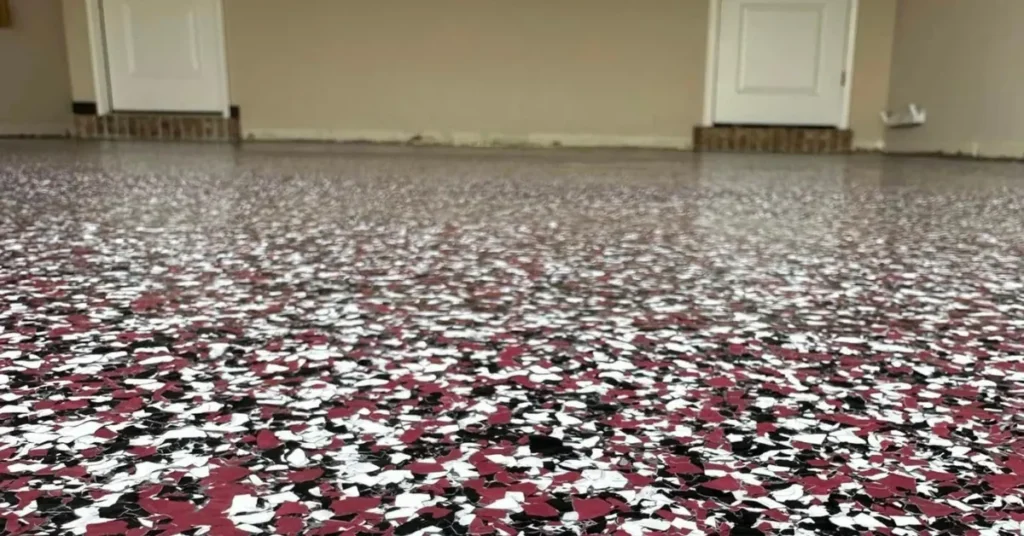
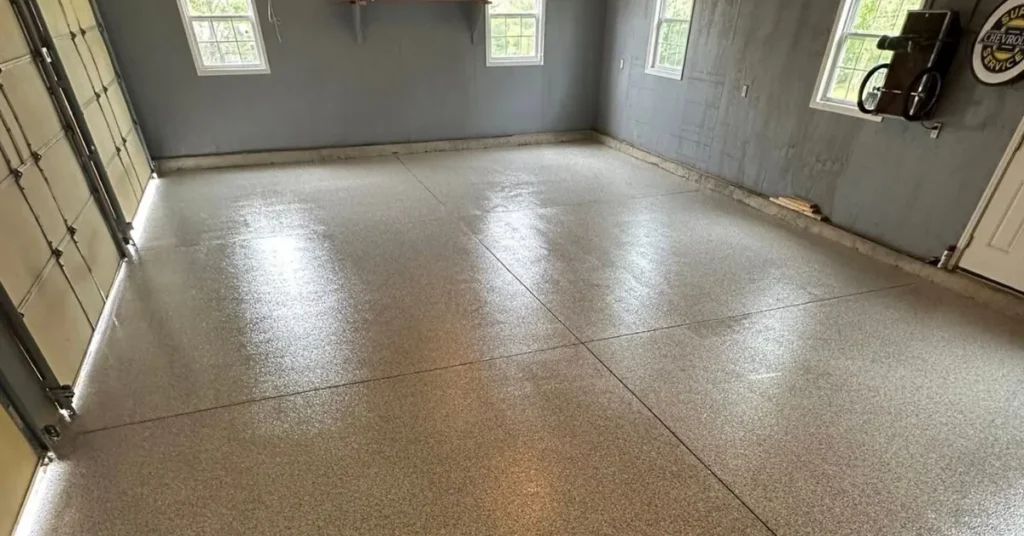
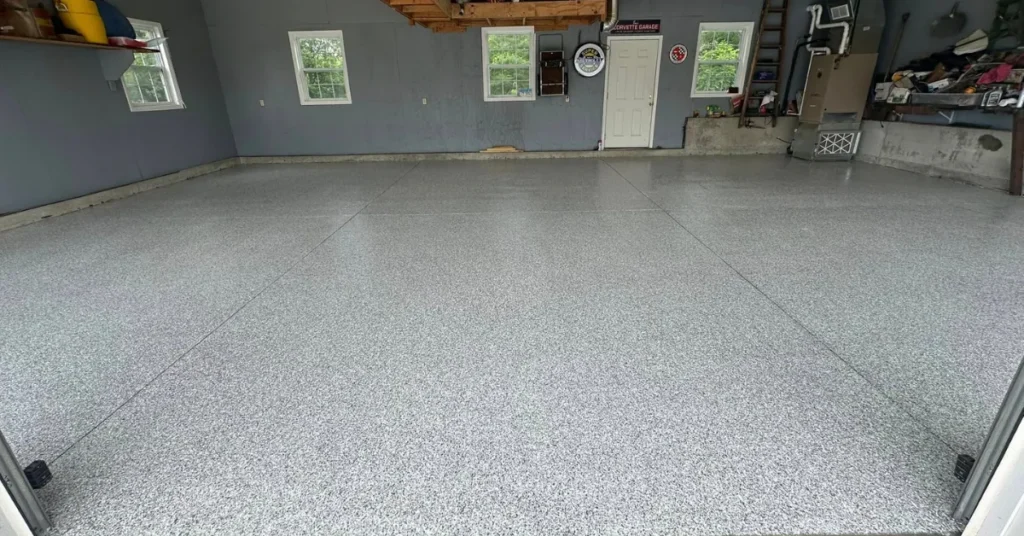
A polyaspartic-coated patio is a significant upgrade over bare concrete. The coated surface resists staining from food, beverages, and outdoor foot traffic. It is easy to rinse clean. The flake broadcast adds visual interest and texture, and there are wide range of color blends to choose from.
Missouri patios deal with summer heat, humidity, occasional heavy rain, and winter freeze-thaw cycles. A properly installed polyaspartic system on well-prepared concrete handles all of these conditions.
Surface preparation for patios is the same as for any concrete surface: diamond grinding to create a mechanical profile, crack and pit repair, and a moisture check before coating is applied.
Pool Decks: Special Considerations
Pool decks add a specific challenge: constant moisture and splash exposure. The coating system and the installation process need to account for this.
A polyaspartic system installed on properly prepared and moisture-tested concrete handles pool deck conditions well. The non-porous surface is easy to clean, resists chlorine and pool chemicals, and maintains its appearance in a consistently wet environment.
Traction is an important consideration for pool decks. A smooth coated surface can be slippery when wet. The flake broadcast adds texture that improves traction. Anti-slip additives can also be incorporated into the top coat for additional safety in high-moisture areas.
What About Patios Without Direct Sunlight?
Covered patios, porches, or outdoor spaces that are shaded may have minimal UV exposure. In these cases, the UV stability argument for polyaspartic over epoxy is less critical. However, moisture exposure remains a consideration.
For any outdoor surface, even shaded ones, the polyaspartic system is still the professional standard. Outdoor surfaces face moisture, weather, and temperature swings that indoor surfaces do not. Using materials designed for these conditions is the right call regardless of UV exposure.
How Does a Coated Patio Compare to Other Outdoor Flooring Options?
- Bare concrete: stains easily, rough appearance, no protection from elements
- Stamped concrete: visually appealing but costly, cracks over time, requires sealing
- Pavers: attractive but shift, settle, allow weed growth in joints, require ongoing maintenance
- Outdoor tile: durable but expensive to install, grout requires maintenance, can crack in freeze-thaw
- Polyaspartic coating: seamless, durable, easy to maintain, UV stable, customizable with flake colors
For homeowners in Cape Girardeau who want a practical, attractive outdoor surface, polyaspartic coating is one of the most cost-effective and durable options available.
FAQ’s
Can epoxy be used on a covered porch?
For a covered porch with minimal direct UV exposure, an epoxy base coat is less of a concern than on an open patio. However, outdoor moisture conditions are still present, and a polyaspartic system is still the professional recommendation for any outdoor application.
How long does a coated patio last?
Outdoor surfaces see more environmental stress than indoor floors, which can affect the longevity of the coating over time. A properly installed polyaspartic system on well-prepared concrete can last for many years with routine maintenance.
Is a coated pool deck safe to walk on when wet?
A flake system adds texture that improves traction. Anti-slip additives can be incorporated into the top coat for additional safety. Discuss this with your contractor to ensure the level of traction is appropriate for your specific pool deck environment.
What colors are available for outdoor surfaces?
The same flake color blends available for indoor installations are available for outdoor surfaces. Neutral and earth-tone blends tend to be popular for outdoor living areas, but the selection is wide. Your contractor can show you available options and help you choose based on your space and preferences.
Ready to transform your patio, pool deck, or outdoor space?
Contact Cutting Edge Epoxy for a FREE quote today.