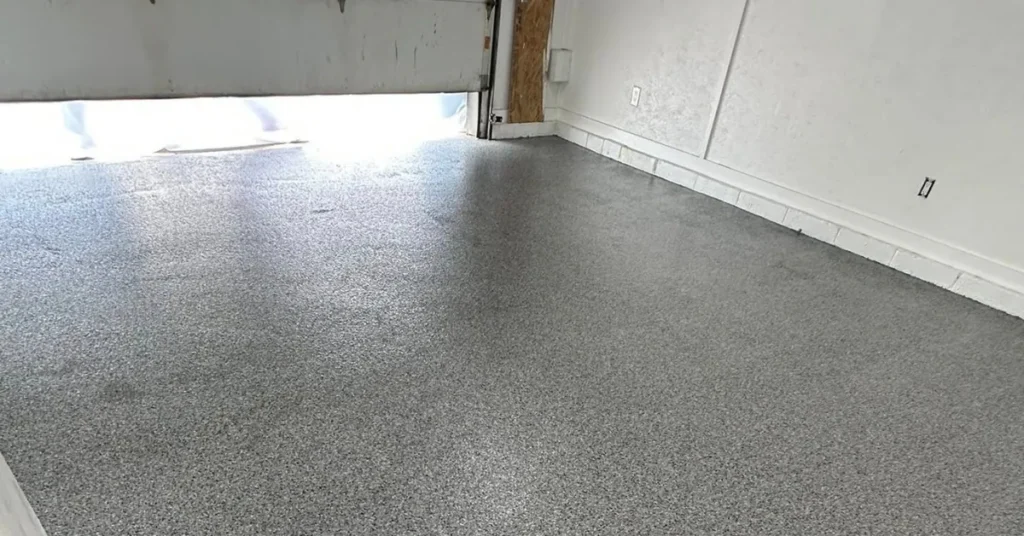
One of the first questions homeowners ask when considering an epoxy garage floor is how long it is actually going to hold up. It’s a fair question. You’re making a real investment, and you want to know what kind of lifespan to expect.
The honest answer is that it depends on several factors. The quality of the products, the thoroughness of the surface preparation, the experience of the crew, and how the floor is maintained over time all contribute to how long an epoxy floor looks and performs its best.
This guide gives you a realistic picture of what to expect from a professionally installed epoxy garage floor and what factors make the biggest difference in longevity.
How Long Does a Professional Epoxy Floor Last?
A professionally installed epoxy and polyaspartic floor, done with commercial-grade products and proper surface prep, regularly holds up for 10 years or more under normal residential use. Some professionally installed floors look and perform well for 15 to 20 years.
This assumes the floor was installed correctly and maintained reasonably well. It is not a floor that requires special treatment or intensive upkeep. Normal sweeping, occasional mopping, and prompt cleanup of oil or chemical spills is typically all that’s needed.
DIY-installed floors with retail products are a different story. These floors often begin to peel, chip, or degrade within two to three years, which is why the product and the installation process matter so much.
What Makes an Epoxy Floor Last Longer?
Surface Preparation
This is the single most important factor in longevity. A floor that is not properly prepared will not hold the coating long-term, regardless of how good the product is.
Professional surface prep involves diamond grinding the concrete to create a mechanical profile that allows the coating to bond deeply. The hardness of the concrete is tested before grinding begins, and the correct diamond configuration is selected based on that test.
Cracks, pits, and imperfections in the concrete are filled before the coating goes down. This creates a smooth, uniform surface for the coating to adhere to.
Moisture Testing
Moisture coming up through the concrete is one of the most common causes of premature coating failure. A professional installer will test moisture levels before applying any coating. If moisture is present at levels above what the base coat can tolerate, an additional moisture vapor barrier is installed first.
Skipping this step is a shortcut that directly increases the risk of delamination over time.
Product Quality
Commercial-grade products are formulated differently from DIY kits. They have higher solids content, bond more aggressively, and are designed to handle real-world conditions over many years. The epoxy base coat and polyaspartic top coat used by professional installers are not the same products available in a retail kit.
UV Protection
The polyaspartic top coat is UV stable. This means it will not amber, yellow, or fade under exposure to light over time. In an indoor garage with no direct sunlight, this is less of a concern. In any space with UV exposure, having a UV-stable top coat is what keeps the floor looking consistent year after year.
Maintenance
Epoxy and polyaspartic floors are easy to maintain, but proper care extends their life. Regular sweeping to remove abrasive debris, prompt cleanup of oil or chemical spills, and avoiding battery acids and highly corrosive chemicals all contribute to long-term floor performance.
What Shortens the Life of an Epoxy Floor?
- Poor surface preparation at the time of installation
- Undetected or unaddressed moisture in the concrete
- Low-grade products with a lower solids content
- Improper mixing or application by an inexperienced crew
- Exposure to battery acid or highly corrosive chemicals
- Lack of basic maintenance over time
The good news is that most of these factors are controlled at the time of installation. A professional installation by an experienced crew using quality products eliminates most of the risks that lead to premature failure.
How Does the System Type Affect Longevity?
For indoor garage floors in Cape Girardeau, an epoxy base coat with a polyaspartic top coat is the most durable combination available. The epoxy penetrates deeply and provides a strong foundation. The polyaspartic top coat takes the daily abuse of traffic, foot activity, and chemical exposure while maintaining its appearance.
For outdoor surfaces like patios and pool decks, polyaspartic is used on both layers. This system is also highly durable and maintains its appearance well outdoors, but outdoor surfaces generally see more UV exposure and weathering, which can affect appearance more quickly than an indoor floor.
What Does the Warranty Tell You?
Warranty length is a reasonable indicator of how confident the installer is in their work. Most professional warranties in this industry protect against delamination. A longer warranty period is a signal that the installer stands behind the quality of their process and materials.
Before hiring any contractor, ask what the warranty covers, how long it lasts, and get it in writing. This is a simple step that protects you in the unlikely event that something does go wrong within the covered period.
FAQ’s
Does an epoxy floor look the same after 10 years?
With proper maintenance, a professionally installed epoxy and polyaspartic floor will look very similar to how it did on day one. High-traffic areas may show minor wear over time, but the overall appearance of a quality floor holds up well over many years.
When should I consider recoating my epoxy floor?
If the top coat begins to show significant scratching, dulling, or wear in high-traffic areas, applying a fresh top coat can restore the appearance and extend the life of the floor. This is typically less expensive than a full reinstallation and can add years to the floor’s lifespan.
Does weather affect how long an epoxy floor lasts?
For indoor garage floors in Missouri, seasonal temperature swings can affect a floor that is not properly installed. A floor with quality materials and proper prep handles the humidity of Missouri summers and the cold of Missouri winters without issue.
Can epoxy floors be repaired if they get damaged?
Minor damage such as chips or scratches in the top coat can often be repaired by a professional. Full delamination or severe damage typically requires removal and reinstallation. This is another reason why quality installation matters upfront.
Invest in a floor that lasts. Contact Cutting Edge Epoxy for a FREE quote on your garage floor project.