It’s a fair concern. You’ve probably seen an epoxy floor in someone’s garage that looks like it’s been through a war. Peeling edges. Chips where the coating has separated from the concrete. Maybe a yellowish tint across the whole surface.
So is that what epoxy flooring does? Will your floor end up like that?
The answer depends almost entirely on how the floor was installed. Epoxy floors fail for specific, identifiable reasons. Understanding those reasons makes it clear why some floors last decades and others fall apart in two years.
Why Do Epoxy Floors Peel?
Peeling is the most common failure mode for epoxy floors, and it almost always comes down to surface preparation.
When concrete is not properly profiled before the coating is applied, the coating cannot bond deeply. It sits on the surface rather than penetrating into it. Over time, with temperature changes, traffic, and normal use, that coating separates from the concrete below. The result is peeling.
DIY kits that use acid etching as their prep method are the most common cause of this failure. Acid etching does not create the same mechanical profile as diamond grinding. The bond is weaker, and the floor eventually lets go.
A professional installation using commercial-grade diamond grinding creates a surface that the epoxy can bond to deeply and permanently. When the coating has actually penetrated the pores of the concrete, it does not peel.
What About Moisture?
Moisture coming up through the concrete is the other leading cause of epoxy failure. Concrete is porous. In many garages, moisture migrates upward through the slab. If a coating is applied without testing for moisture, and without installing a vapor barrier where needed, that moisture pushes up against the underside of the coating over time.
The result is blistering, bubbling, and eventually delamination. The floor literally lifts off the concrete from below.
A professional installation includes a moisture test before any coating goes down. If moisture levels are elevated, a moisture vapor barrier is applied first. This stops the moisture from reaching the coating and prevents one of the most destructive forms of floor failure.
Does Epoxy Crack?
The coating itself does not typically crack under normal residential conditions. However, if the concrete beneath the coating develops cracks, those cracks can telegraph up through the coating over time.
This is why crack repair is part of the professional installation process. Before the coating goes down, any existing cracks and damaged areas in the concrete are filled using 100% solids fillers. This creates a smooth, stable surface that the coating can adhere to without being affected by existing damage.
In extremely cold climates where freeze-thaw cycles cause significant concrete movement, a polyurea base coat offers more flexibility than epoxy and is less likely to crack along with the concrete. For most residential garages in Cape Girardeau, this is not a concern with a standard epoxy and polyaspartic system.
Will Epoxy Yellow or Fade?
Epoxy does have a tendency to yellow or amber over time, especially in spaces with direct sunlight. This is a real characteristic of the material and it is why epoxy is not typically used as a base coat for outdoor surfaces.
For indoor garages with no direct sunlight, the epoxy base coat is protected by the polyaspartic top coat. The top coat is UV stable. It will not yellow or fade. Because the top coat is what the eye sees, the floor maintains its appearance over time.
The yellowing issue shows up most visibly in floors coated with clear epoxy, or in floors where the top coat lacks UV protection. A polyaspartic top coat eliminates this concern for the visible surface of the floor.
What About Chipping and Scratching?
A properly installed epoxy and polyaspartic floor is highly resistant to chipping and scratching under normal use. Vehicle traffic, foot traffic, dropped tools, and similar everyday impacts are well within what the system can handle.
The polyaspartic top coat is the most scratch-resistant of the three coating materials. It takes the brunt of daily wear while protecting the layers below.
Significant point impacts, like dropping heavy equipment directly onto the floor, can cause damage. But normal residential use, including parking vehicles and using the garage as a working space, does not cause chipping in a quality installation.
What Causes the Roller Marks and Inconsistent Appearance?
Visible roller marks in the top coat and uneven flake coverage are signs of poor workmanship, not product failure. They happen when a crew applies the coating incorrectly or works too slowly for the product’s working window.
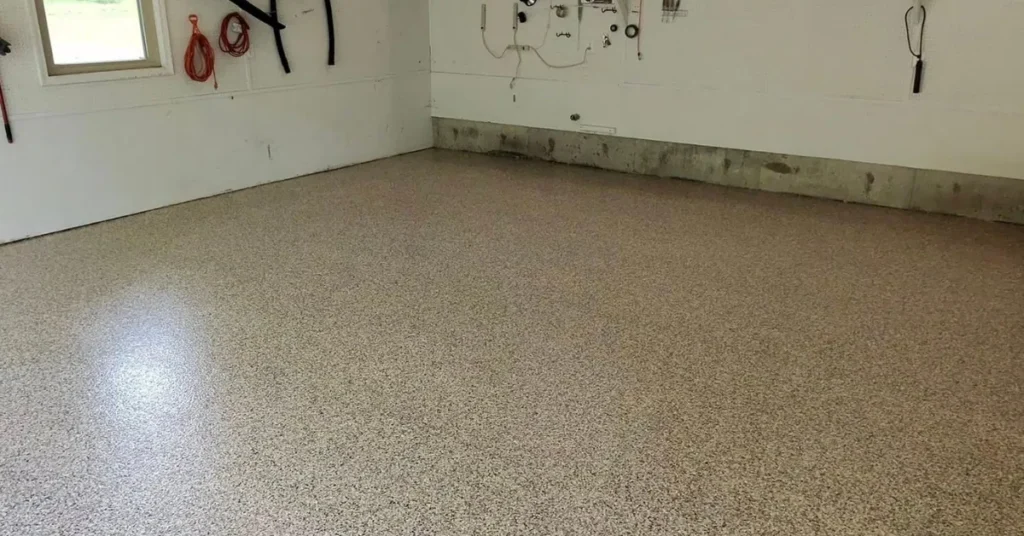
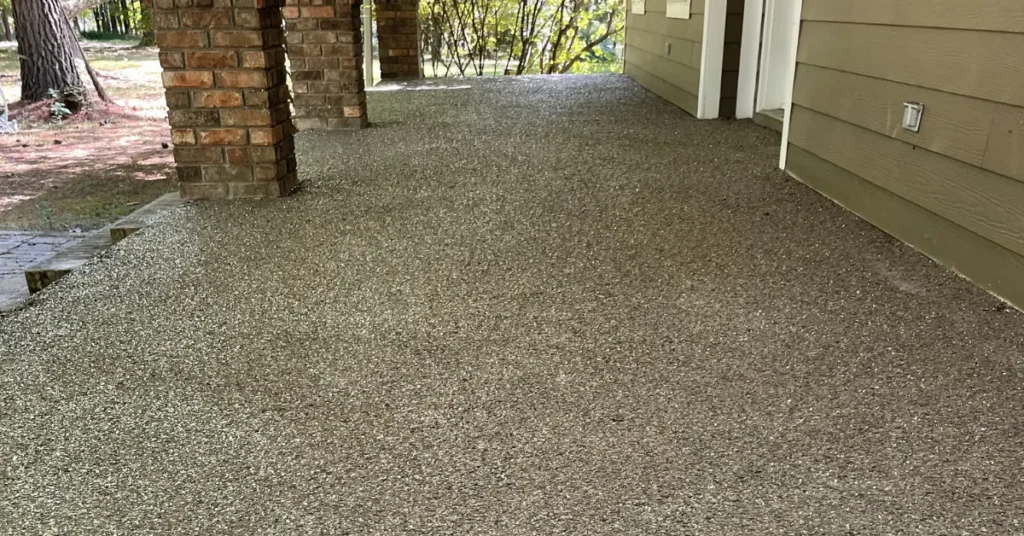
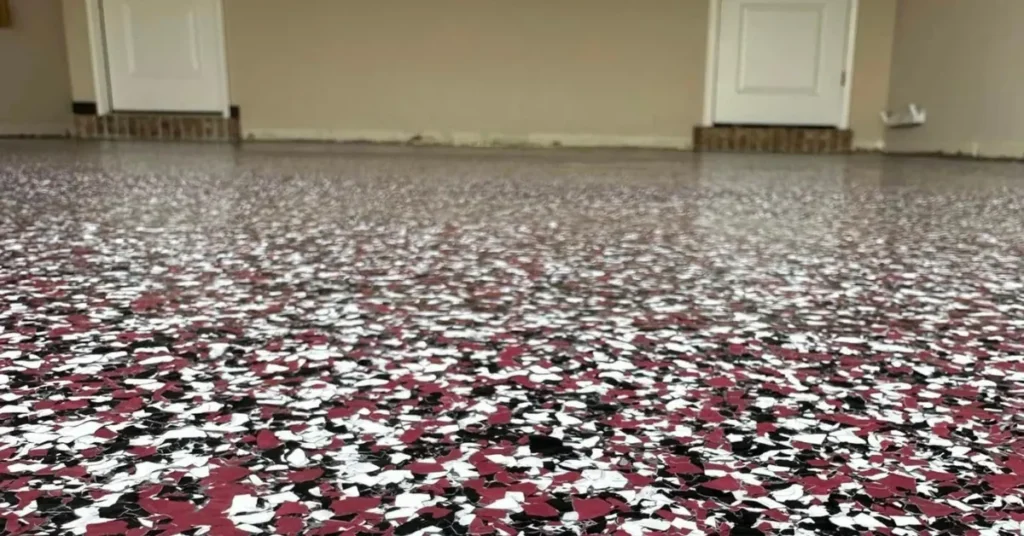
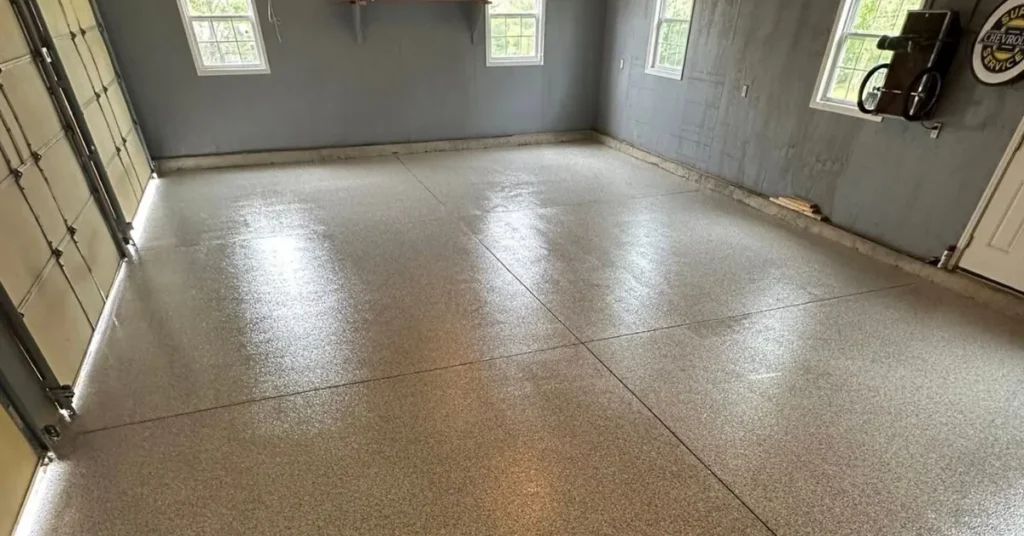
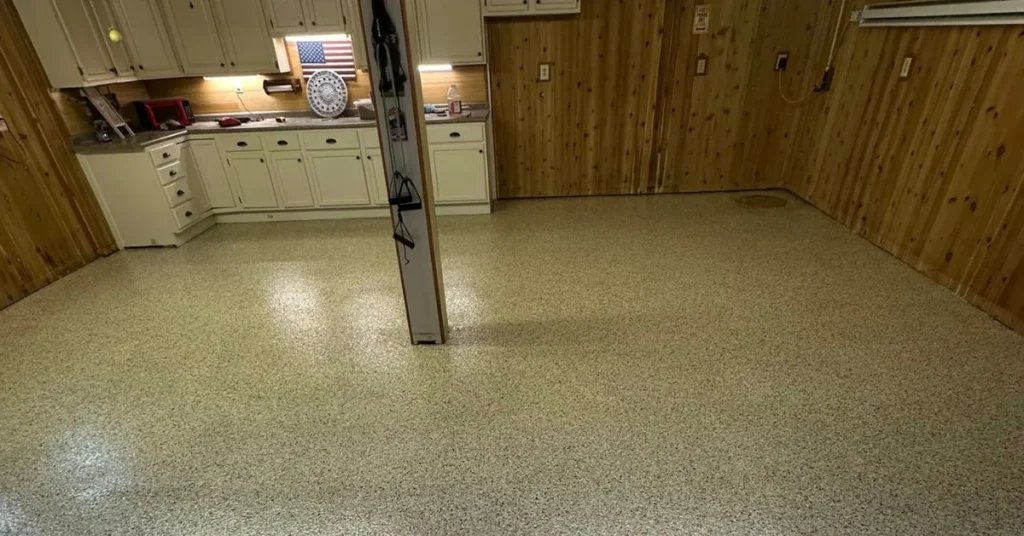
Professional installation produces a floor that is visually uniform from wall to wall. No roller marks. No variation in flake coverage. No visible seams where sections were applied separately. This is the standard of a quality installation and what separates an experienced crew from one that is still learning the trade.
How to Avoid Epoxy Floor Failure
The factors that cause floor failure are almost entirely controlled during the installation process. Here is what a proper professional installation prevents:
- Peeling: eliminated by commercial-grade diamond grinding and proper surface profiling
- Moisture-related failure: eliminated by testing and vapor barrier installation where needed
- Crack telegraphing: minimized by proper crack repair before coating
- Yellowing: managed by using a UV-stable polyaspartic top coat
- Uneven appearance: prevented by experienced crews working correctly within the product’s working window
Choose the right contractor, ask the right questions, and the odds of your floor failing in any of these ways drop dramatically.
FAQ’s
Can a peeling epoxy floor be fixed without full reinstallation?
In some cases, partial repairs are possible if the delamination is localized. However, if the failure is widespread or is the result of moisture, full removal and reinstallation is typically the right approach. Patching over a floor that has failed due to poor prep or moisture will result in the same failure again.
How do I know if my floor is at risk of peeling?
Signs of an at-risk floor include areas where the coating feels hollow when tapped, visible bubbling or blistering, and edges or seams that are starting to lift. If you see these signs, contact a professional before the damage spreads.
Is it possible for a professionally installed floor to still fail?
In rare cases, yes. No installation is completely immune to failure. However, a properly installed floor on well-prepared concrete with moisture testing completed is extremely unlikely to fail under normal conditions. This is why warranty terms matter.
Does hot tire pickup affect epoxy floors?
Hot tire pickup is a known issue with some DIY and lower-quality epoxy products. Hot tires from a driven vehicle can pull at a coating that is not properly bonded or has lower-quality top coat chemistry. Commercial-grade polyaspartic top coats are designed to resist this. Professional installations are typically not susceptible to hot tire pickup.
Don’t risk a floor that fails. Contact Cutting Edge Epoxy for a FREE quote on a professional installation that lasts.