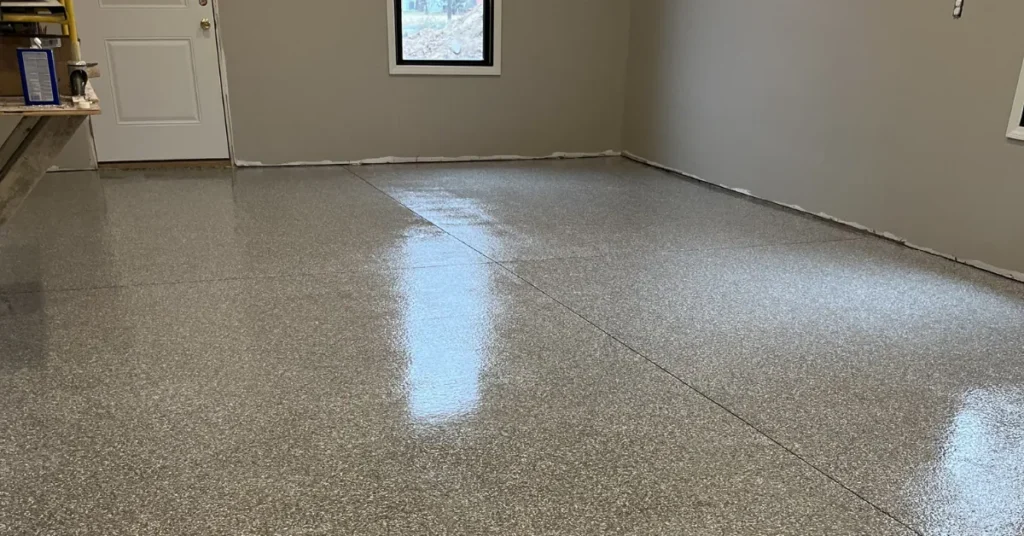
Missouri weather does not hold back. Cape Girardeau sees real summer heat and real winter cold. For anyone considering an epoxy garage floor, the question of temperature performance is worth taking seriously.
The short answer is that a properly installed epoxy and polyaspartic system handles Missouri’s climate well. But the type of system used and the quality of the installation both matter when it comes to long-term performance in temperature extremes.
How Cold Weather Affects Epoxy Floors
Concrete is not a static material. In cold weather, concrete contracts. When it warms up, it expands. These thermal cycles put stress on anything bonded to the surface of the concrete.
A properly installed floor with quality products is designed to handle this movement. The bond between the coating and the concrete is strong enough to move with the slab through normal seasonal changes without cracking or separating.
Where floors fail in cold weather is when the bond is weak to begin with. If the surface was not properly prepared, or if the coating did not penetrate deeply, the coating and the concrete move at slightly different rates under thermal stress. Over time, that leads to separation and peeling.
In climates with especially severe freeze-thaw cycles, a polyurea base coat is sometimes preferred over epoxy because of its greater flexibility. Polyurea can flex with the concrete more easily than epoxy, which is more rigid. For most residential garages in Cape Girardeau, a standard epoxy and polyaspartic system with proper prep handles the Missouri winter without issue.
How Heat and UV Affects Epoxy Floors
Heat is a more nuanced consideration than cold. The primary concern in hot weather is not the temperature itself but the UV exposure that comes with direct sunlight.
Epoxy, when used as a base coat in an indoor garage, is protected from UV exposure by the polyaspartic top coat. The polyaspartic is UV stable. It does not amber, yellow, or degrade under light exposure. The floor maintains its color and appearance regardless of what the sun does.
The issue arises when epoxy is used in outdoor applications or in spaces with direct sunlight. Epoxy will amber and discolor when exposed to UV over time. This is why professional installers use polyaspartic, not epoxy, as the base coat for outdoor surfaces like patios, pool decks, and driveways.
The Right System for Indoor vs Outdoor Spaces
Indoor Garage (No Direct Sunlight)
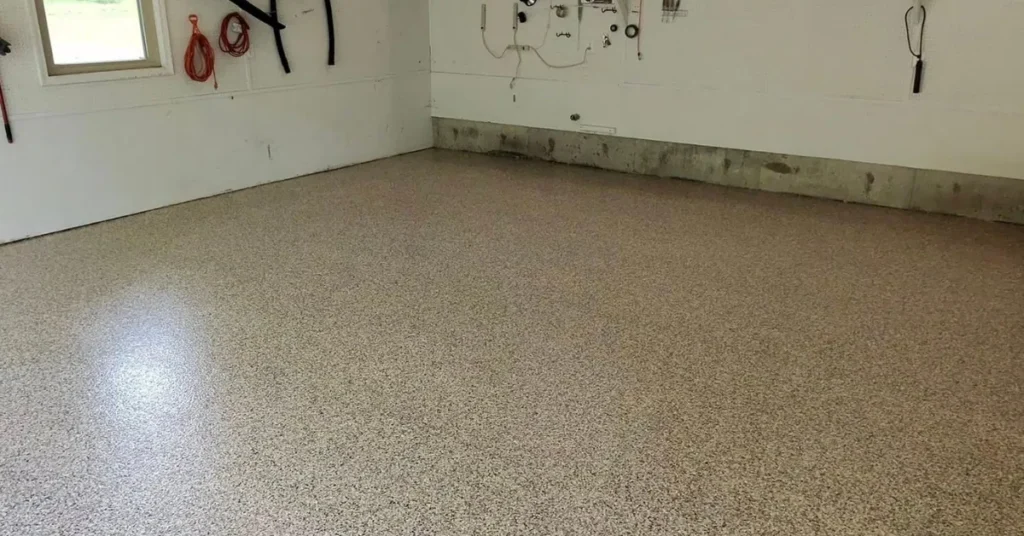
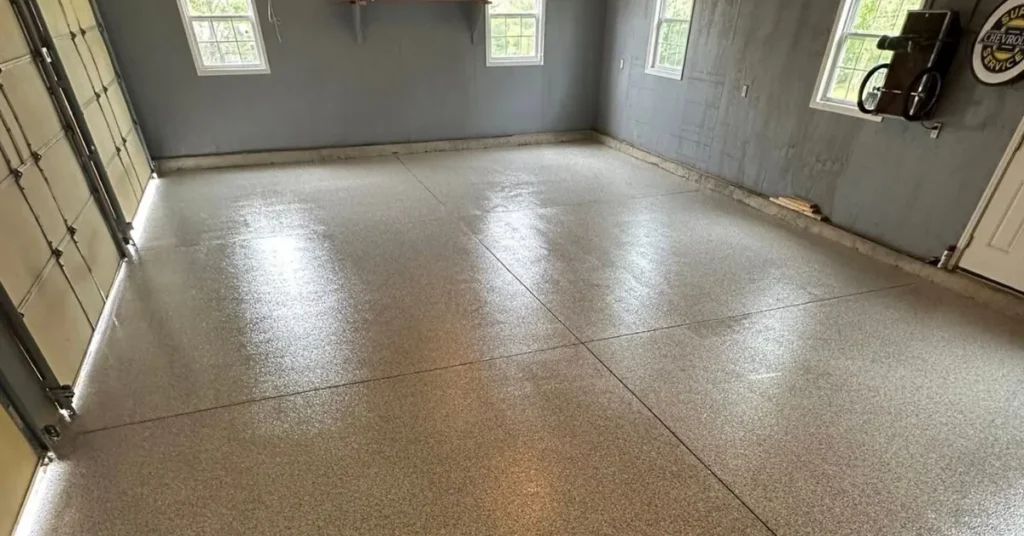
Epoxy base coat with polyaspartic top coat. The epoxy provides the strongest bond and the best moisture protection. The polyaspartic provides UV stability, scratch resistance, and the finished appearance. This is the most durable combination for indoor residential applications.
Outdoor Surfaces with Direct Sunlight
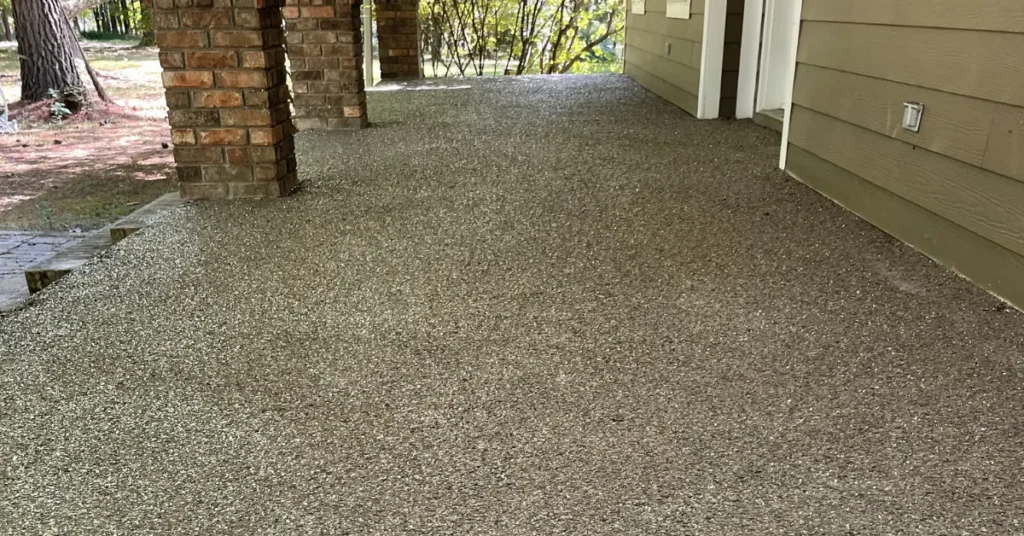
Polyaspartic base coat with polyaspartic top coat. Because UV exposure is the primary concern outdoors, using polyaspartic on both layers keeps the entire system UV stable. Over time, an epoxy base coat outdoors will affect the appearance of the floor as it ambers beneath the top coat.
Temperature and the Installation Process
Extreme temperatures affect not just the long-term performance of the floor but also the installation process itself.
Epoxy and polyaspartic products have temperature-sensitive working windows. Very cold temperatures slow down the curing process and can affect how the products flow and level. Very hot temperatures speed up the curing window and reduce the time the crew has to work before the product begins to set.
Professional installers understand these variables and schedule accordingly. Trying to install an epoxy floor in extreme conditions without adjusting the process is a setup for an inconsistent or compromised result.
What About Hot Tires?
Hot tire pickup is a concern that sometimes comes up in discussions about garage floors in hot climates. When a vehicle has been driven and the tires are hot, parking it on a floor with a weak or poorly bonded coating can cause the coating to pull away.
This is primarily a problem with DIY and lower-grade products. Commercial-grade polyaspartic top coats are designed to resist hot tire pickup. A professionally installed floor does not typically exhibit this problem under normal driving and parking conditions.
What to Expect from a Missouri Garage Floor
For homeowners in Cape Girardeau and the surrounding area, an epoxy and polyaspartic system installed by a professional crew is well-suited to the climate. The system handles the temperature range, resists moisture, and maintains its appearance through Missouri’s seasonal swings.
The key is a quality installation. Surface prep, moisture testing, and the right product system for the specific space all contribute to how the floor performs in real-world conditions over time.
FAQ’s
Will my epoxy floor crack in winter?
A properly installed epoxy and polyaspartic floor on well-prepared concrete does not crack due to normal temperature changes. The system is designed to handle typical seasonal thermal movement. Cracking is most commonly associated with concrete movement below the coating, not the coating itself.
Can extreme heat cause the floor to peel?
Extreme heat alone is unlikely to cause a properly installed floor to peel. The more likely cause of heat-related peeling is UV exposure on outdoor surfaces where epoxy was used as the base coat. For indoor surfaces, the UV-stable polyaspartic top coat prevents heat and light-related degradation.
What temperature is too cold to install an epoxy floor?
Most epoxy products should not be applied below 50 degrees Fahrenheit. Polyaspartic products often have slightly different temperature requirements. A professional crew will assess conditions before starting and schedule or adjust the process accordingly.
Is polyurea better than epoxy for cold climates?
Polyurea is more flexible than epoxy and handles freeze-thaw movement better. For most residential garages in Missouri, a standard epoxy and polyaspartic system handles the climate well. In climates with more extreme freeze-thaw cycling, polyurea as the base coat is a stronger choice.
Ready for a floor built for Missouri’s climate? Contact Cutting Edge Epoxy for a FREE quote today.