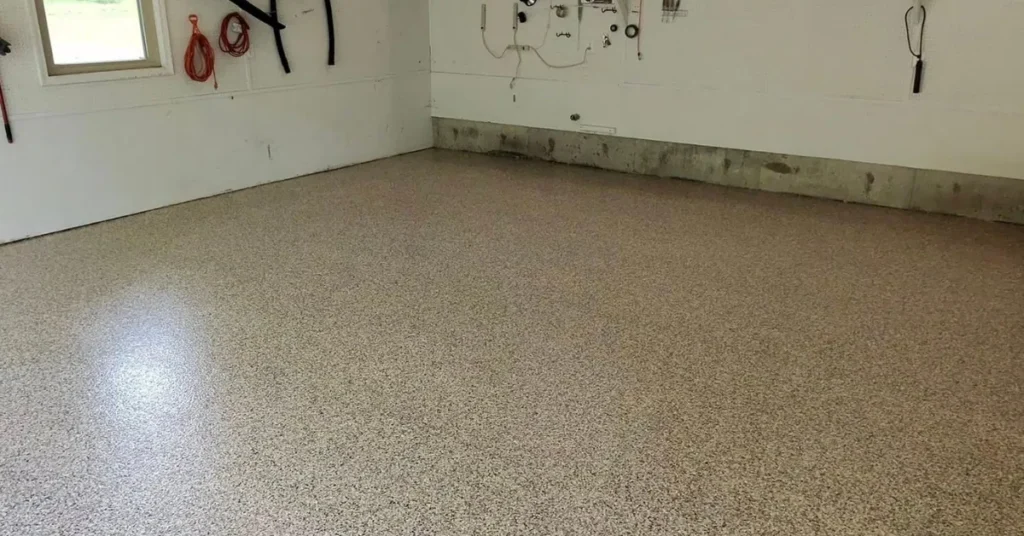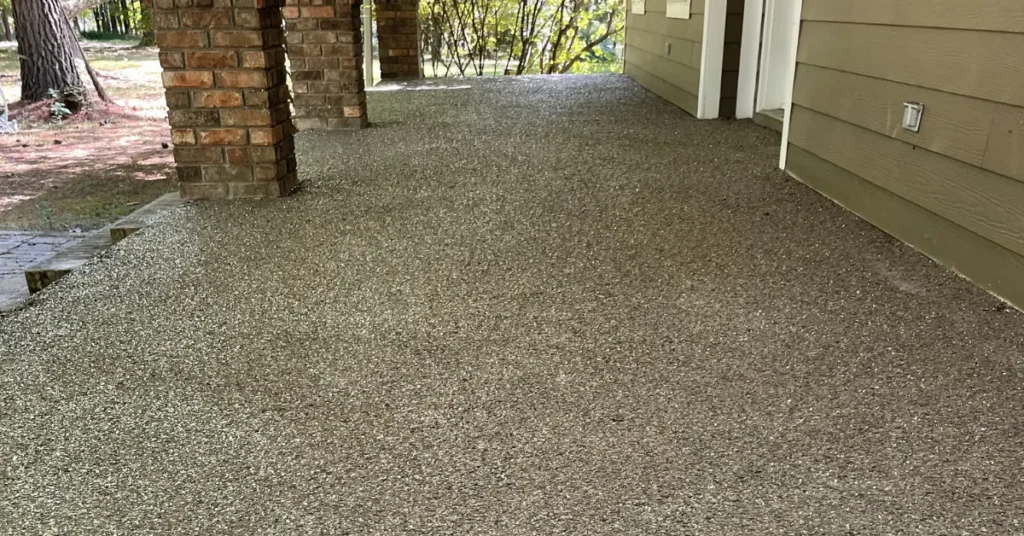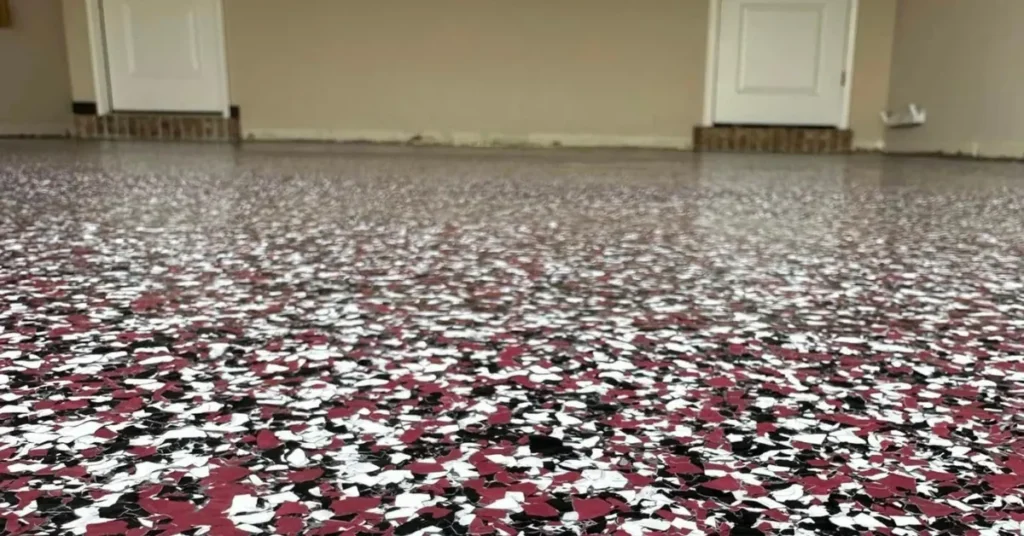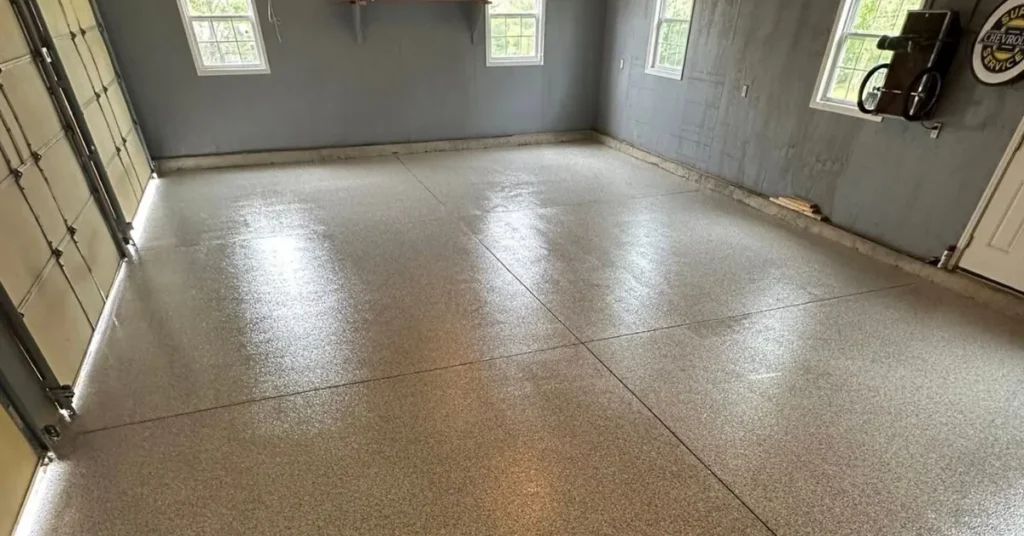
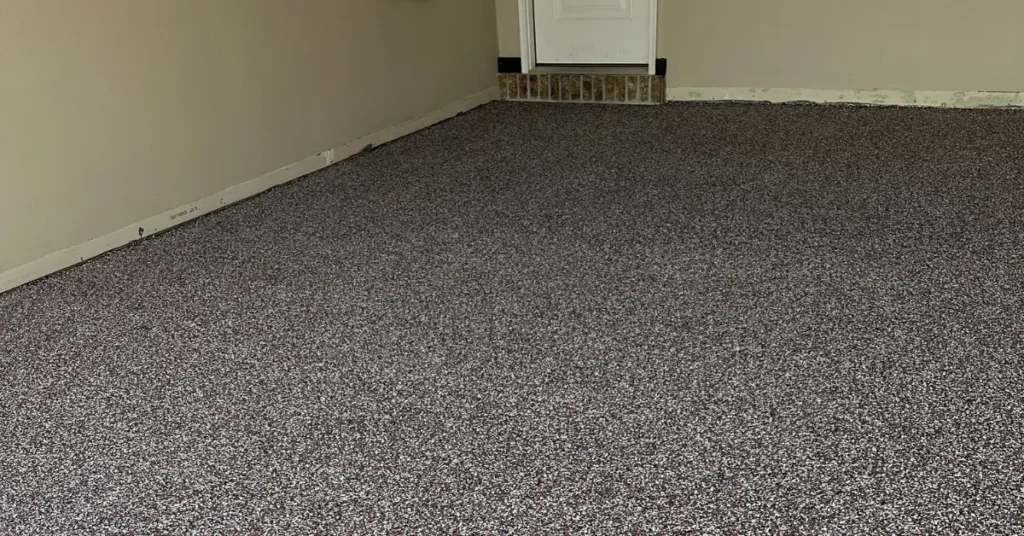
A professionally installed epoxy and polyaspartic floor is one of the lowest-maintenance flooring options available. That does not mean zero maintenance. But with the right habits and occasional deeper care, your floor can look great and perform well for many years.
This guide covers everything you need to know about maintaining an epoxy garage floor over the long term, from daily habits to seasonal care to when it might be time to recoat.
Daily and Weekly Maintenance
Routine maintenance for an epoxy floor is simple. Sweep or blow the floor regularly to remove abrasive dirt and debris. Grit and fine particles that get dragged underfoot or under tires act like sandpaper on the top coat over time. Removing them regularly prevents unnecessary wear.
For any spills, clean them up promptly. Oil, grease, and most garage chemicals do not damage the coating if cleaned up before they dry. Use Simple Green, Pine-Sol, Dawn, or Miracle Spirits for oil and grease cleanup. Apply the cleaner, let it sit for about 10 minutes, and wipe or mop the area clean.
Monthly Cleaning
Once a month, or whenever the floor looks like it needs it, mop the floor with warm water and a mild cleaner. This removes the buildup of fine dust, tracked-in dirt, and any residue from spills that were partially cleaned.
A flat mop or microfiber mop works well. Avoid overly soapy cleaners that leave residue. Rinse with clean water after mopping to prevent soap haze from building up on the surface.
Seasonal Maintenance
After Winter
Road salt and de-icing chemicals tracked in by vehicles during winter can build up on the floor. At the end of winter, rinse the floor thoroughly with water to remove salt and chemical residue. Salt left on the surface over time can dull the finish of the top coat.
A thorough mop with a mild degreaser at the end of winter and the start of spring is a good habit for garages in the Cape Girardeau area.
Before Summer
Summer heat and humidity in Missouri can lead to more condensation on the floor surface. Make sure the garage has adequate ventilation. A floor that is regularly swept and free of abrasive debris handles summer conditions well.
What to Avoid
- Do not use harsh abrasive cleaners or steel wool on the surface
- Avoid battery acids and highly corrosive chemicals on the floor surface
- Do not drag sharp or rough objects across the floor
- Avoid placing items with very sharp metal feet directly on the floor without protective pads
- Avoid letting road salt accumulate on the floor through the winter months
Protecting High-Traffic Areas
In garages where a vehicle is parked in the same spot every day, the tire contact areas can show more wear over time than the rest of the floor. This is normal. Heavy equipment or storage systems with narrow legs can also create concentrated pressure points.
Using protective pads under equipment and storage shelving distributes the load and reduces wear in specific areas. For vehicle parking, this wear is generally cosmetic and does not affect the structural integrity of the floor.
When to Consider Recoating
Even a high-quality epoxy and polyaspartic floor will eventually show signs of wear in high-traffic areas. The top coat may dull or show fine scratches over many years of use.
When the top coat has worn noticeably but the base coat is still in good condition, applying a fresh polyaspartic top coat can restore the floor’s appearance and extend its life significantly. This is a fraction of the cost of full reinstallation and can add years to the floor.
Signs that a recoat may be worth considering include visible dulling of the top coat, fine surface scratches that have accumulated, or a loss of the floor’s original reflectivity. These are normal signs of wear over time and not signs of installation failure.
Long-Term Inspection
Once a year, take a close look at the floor for any signs of delamination, bubbling, or unusual wear. Catching small issues early gives you more options and typically more cost-effective solutions than waiting for problems to grow.
If you see any areas where the coating appears to be lifting, bubbling, or separating from the concrete, contact a professional. Early intervention is almost always easier and less expensive than addressing advanced delamination.
FAQ’s
How often should I reseal my epoxy floor?
A professionally installed epoxy and polyaspartic floor typically does not need resealing for many years. When the top coat begins to show visible wear, a fresh top coat application can restore the floor without requiring full removal. The timing depends on the level of use the floor sees.
Can I wax my epoxy floor?
Waxing is generally not recommended for polyaspartic-coated floors. The top coat provides its own protective properties. Wax can actually make the floor more slippery and is difficult to remove properly. Stick to the recommended cleaning routine.
What should I do if the floor gets scratched?
Minor scratches in the top coat are typically cosmetic and do not affect the performance of the floor. For significant scratching across a wide area, a professional assessment can determine whether a fresh top coat is appropriate.
How do I know when my floor needs professional attention?
Contact a professional if you notice bubbling, peeling edges, areas that sound hollow when tapped, or any lifting of the coating from the concrete. These are signs of potential delamination that are best addressed early.
Questions about your existing floor or ready for a new installation? Contact Cutting Edge Epoxy for a FREE consultation.