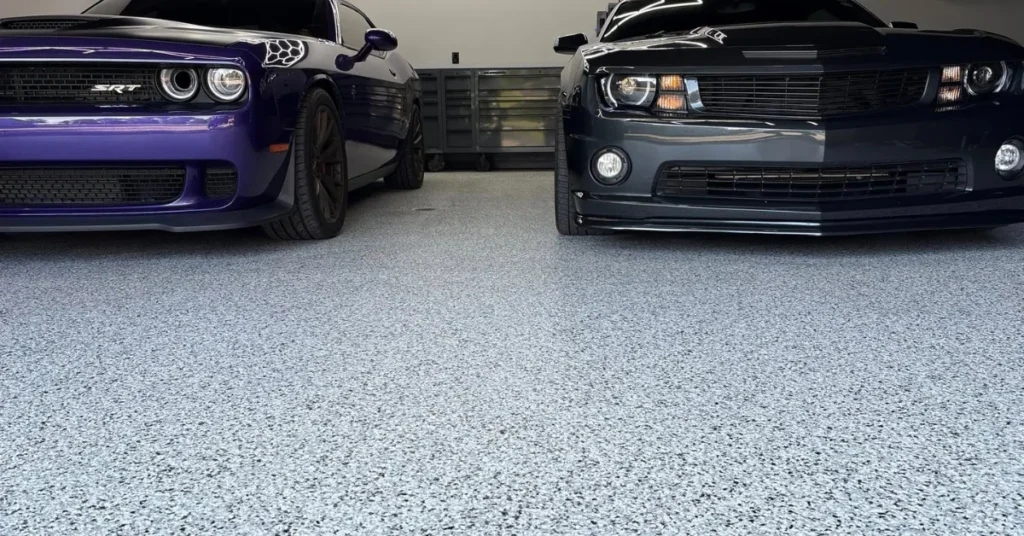
If you’ve started researching garage flooring, epoxy has probably come up more than once. It’s one of the most talked-about options in the category. But is all the attention justified? Is epoxy actually a good choice for a garage floor?
The short answer is yes, a professionally installed epoxy and polyaspartic system is one of the best flooring options available for residential garages. But the longer answer involves understanding what the system does well, where it has limits, and what makes the difference between a great floor and a floor that fails.
What Makes Epoxy Good for Garage Floors?
It Handles the Way Garages Are Actually Used
Garages see vehicle traffic, tool drops, oil spills, chemicals, and daily foot activity. A professionally installed epoxy and polyaspartic floor is built for exactly this kind of use.
The epoxy base coat creates a thick, hard surface that resists impact and stands up to the weight of vehicles. The polyaspartic top coat provides scratch resistance and chemical resistance that protects the floor under daily use.
It Resists Stains and Chemicals
Plain concrete stains easily. Oil, grease, coolant, and other garage fluids soak in and become permanent. An epoxy-coated floor is non-porous at the surface level. Spills sit on top rather than soaking in. Wipe or mop it up and the floor looks clean again.
Routine chemicals found in garages, like motor oil, brake fluid, and mild solvents, do not damage a properly installed epoxy floor. Battery acids and highly corrosive chemicals are an exception and should be cleaned up promptly.
It Transforms the Look of the Space
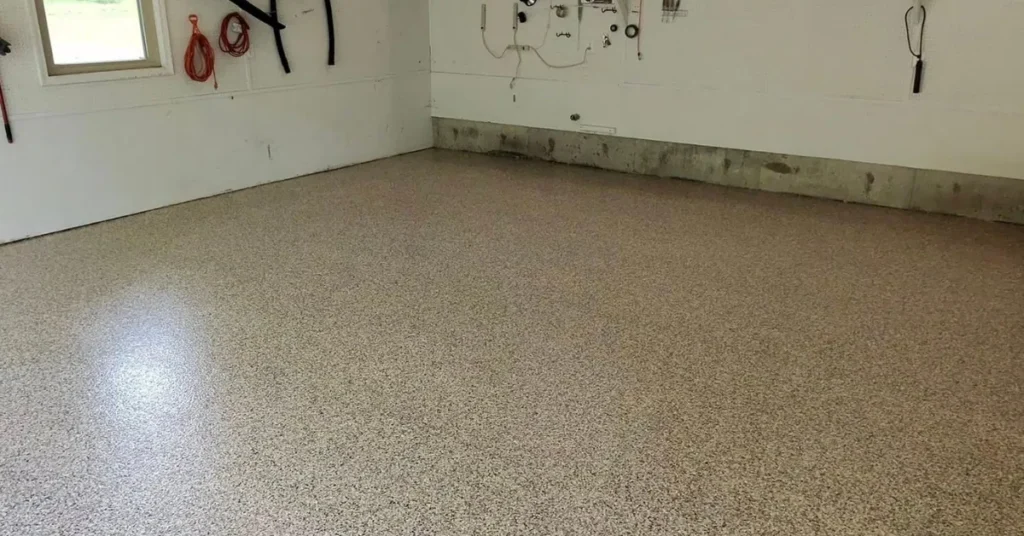
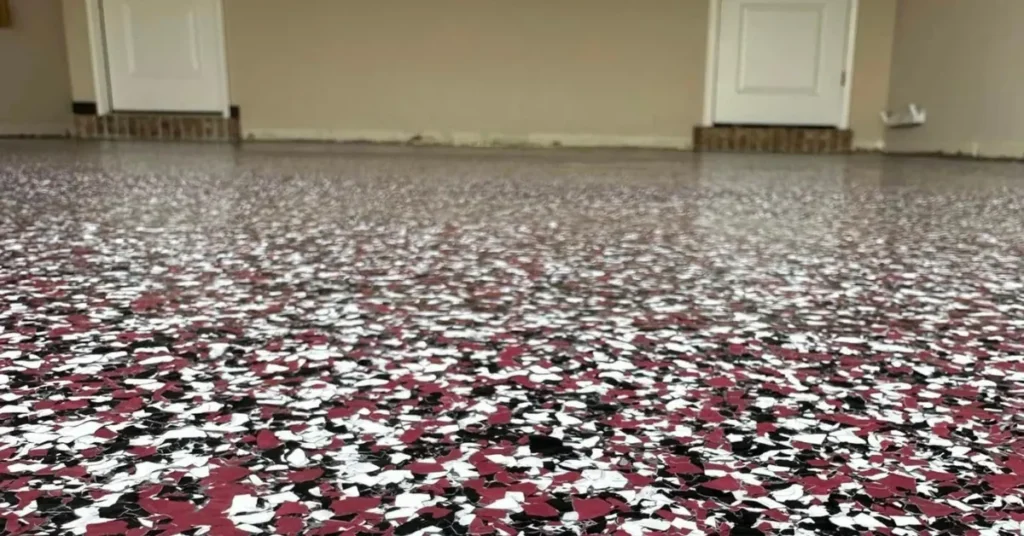
A garage with a bare concrete floor looks unfinished. The same garage with a flake epoxy floor in a color that complements the home looks intentional, clean, and well-maintained.
The aesthetic upgrade is one of the primary reasons homeowners choose epoxy. The floor becomes a feature of the space rather than something you ignore. And because the floor is easy to clean, it stays looking good without a lot of effort.
It Adds Functional Value
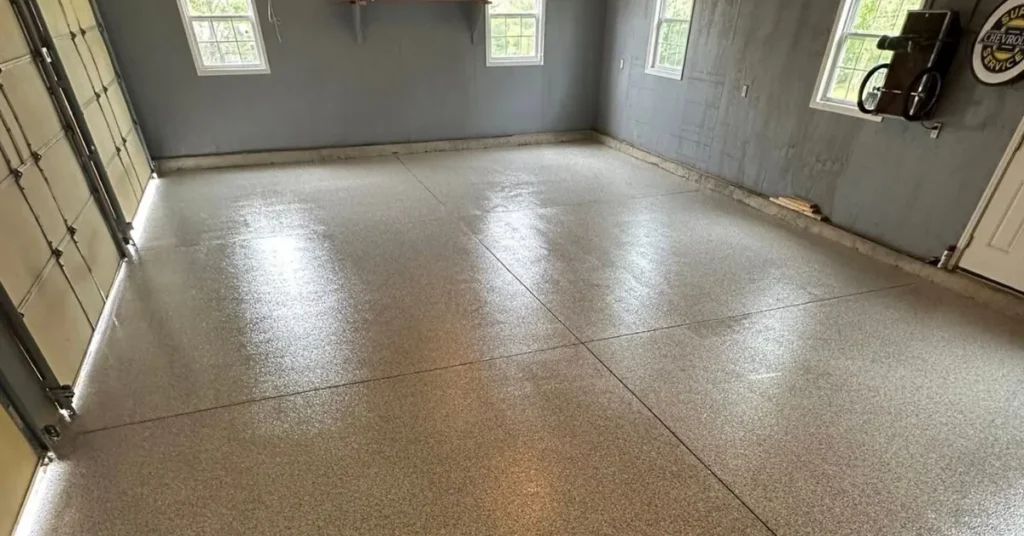
Epoxy floors are bright. The reflective surface of the coating bounces light around the garage, making the space feel larger and better-lit. For anyone who works in the garage, does projects, or stores items there, better lighting is a real functional benefit.
The floor is also easy to clean. Sweep up debris, rinse off dust, mop up spills. No special products or intensive cleaning routines are required.
Where Epoxy Has Limits
It Requires Professional Installation to Perform Well
An epoxy floor is only as good as the installation. A floor installed with inadequate surface prep, lower-grade products, or poor technique will not deliver the results described above. It will peel, chip, or look inconsistent within a few years.
This is not a flaw in the product. It is a reason to choose your contractor carefully and understand the difference between a professional installation and a DIY kit from the hardware store.
It Is Not Maintenance-Free
Epoxy floors are low-maintenance, not zero-maintenance. Normal sweeping, occasional mopping, and prompt cleanup of spills are needed to keep the floor performing and looking its best. Neglecting basic care over years can affect the appearance and longevity of the floor.
Outdoor Installations Require a Different System
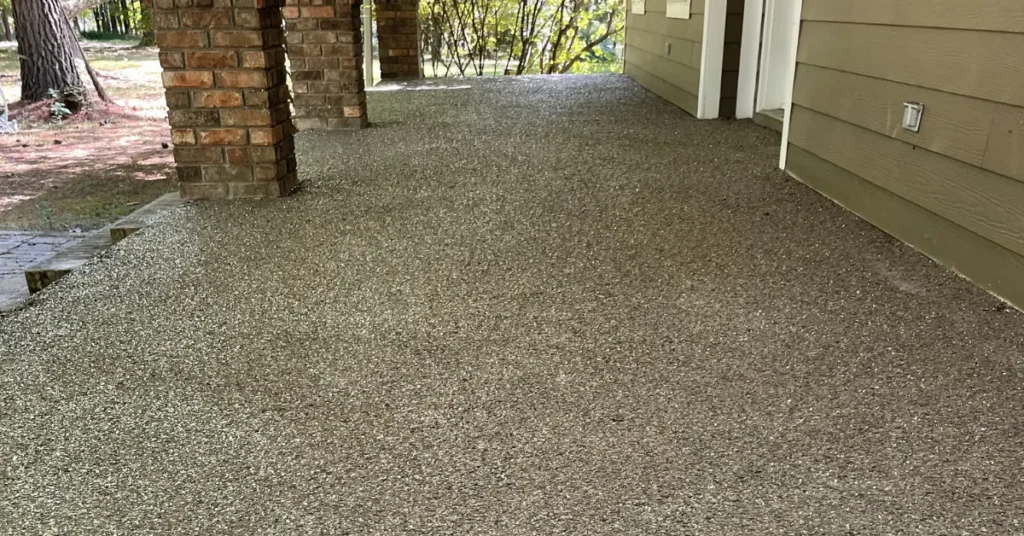
Epoxy is not the right base coat for outdoor surfaces with direct sunlight. UV exposure will cause epoxy to amber over time. Patios, pool decks, and driveways require a polyaspartic base coat, not epoxy.
Cutting Edge Epoxy serves homeowners across Cape Girardeau who need the right system for the right application, whether it’s an indoor garage or an outdoor surface. The coating system is matched to the environment.
Is Epoxy Better Than the Alternatives?
For most residential garages, yes. Here is how epoxy compares to the most common alternatives:
- Bare concrete: stains easily, uncomfortable to stand on, and offers no visual appeal. Epoxy wins on every dimension.
- Floor paint: cheaper upfront but peels within a few years and requires regular repainting. Epoxy wins on longevity.
- Interlocking tiles: easier to install yourself but can shift, trap moisture and debris underneath, and do not have the seamless, uniform appearance of a coated floor.
- Rubber mats: practical in some situations but do not cover the full floor and do not offer the same durability or aesthetic appeal.
For a complete, durable, good-looking garage floor solution, professionally installed epoxy is at the top of the category.
FAQ’s
Is epoxy flooring good for all types of garages?
Epoxy flooring works well in virtually all residential garage applications, from small single-car garages to large three-car garages and workshops. The system is scalable and the process is the same regardless of size.
Can epoxy floors get slippery when wet?
A smooth epoxy floor can be slippery when wet. The flake broadcast in a flake system adds texture that improves traction. If slip resistance is a priority, discuss this with your installer. Additional anti-slip additives can also be incorporated into the top coat.
How does epoxy flooring affect home value?
An upgraded, well-maintained garage floor adds to the overall appeal and perceived value of a home. While it is difficult to assign a specific dollar amount to the upgrade, it is consistently viewed favorably during home showings and sales.
What is the most popular flake color for garage floors?
Color preferences are personal and vary widely. Neutral tones like gray blends and earth tones are popular for their versatility. Bolder color blends that incorporate black and white are also widely chosen. Your contractor can show you available color options and help you choose based on your specific space.
Find out if epoxy is right for your garage. Contact Cutting Edge Epoxy for a FREE, no-pressure quote today.