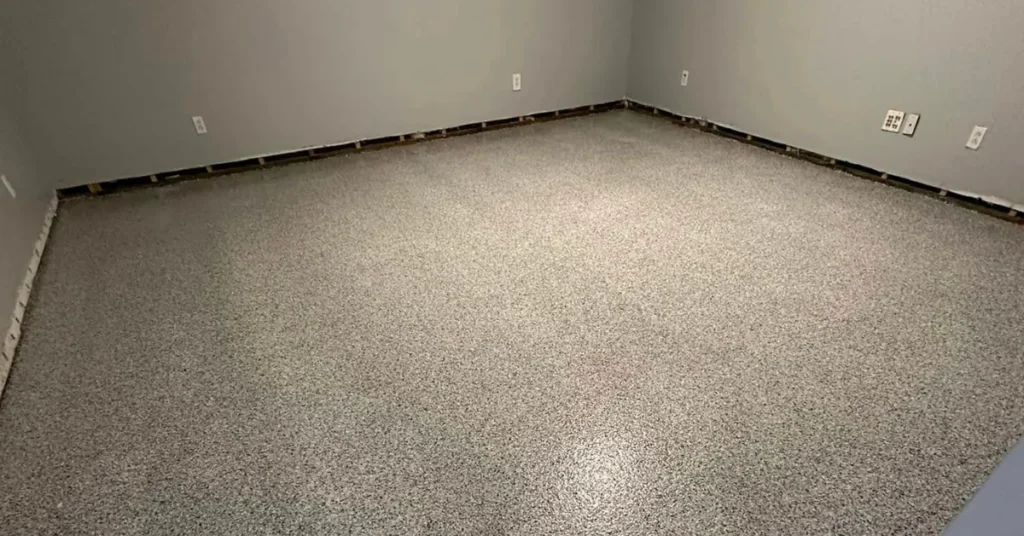
Basements are one of the most underutilized spaces in a home. They’re often left with bare concrete floors, collect moisture, and end up as forgotten storage areas. But a professionally coated basement floor changes how that space looks, feels, and functions.
Epoxy and polyaspartic concrete coatings work well in basements. But basements have specific conditions that need to be addressed before any coating goes down. Understanding those conditions is the difference between a floor that lasts and one that fails.
Why Basement Floors Are a Different Challenge
Basements sit below grade. That means they are surrounded by soil on multiple sides and are exposed to ground moisture in a way that garages and above-grade rooms are not. Moisture migrates upward through concrete slabs over time, and in basements, this process is more pronounced than in any other part of the home.
This is not a reason to avoid coating a basement floor. It is a reason to take moisture seriously before the coating goes down. A professional installer tests for moisture before any product is applied. If moisture levels are elevated, a moisture vapor barrier is installed first. This stops moisture from pushing up through the slab and against the underside of the coating.
Skip the moisture test, skip the vapor barrier, and you end up with a floor that bubbles, blisters, and eventually peels. Do it right, and you have a floor that holds up for years.
What Coating System Works Best for Basements?
For basement floors, the system is the same as a standard indoor installation: epoxy base coat with a polyaspartic top coat.
The epoxy base coat is the right choice for basements specifically because of its moisture tolerance. Most commercial-grade epoxy formulations include a built-in moisture barrier. This makes epoxy the most resistant of the three coating materials to moisture coming up through the slab. In a basement environment, that built-in protection matters.
The polyaspartic top coat seals the system, adds scratch resistance, and provides the finished appearance. It is UV stable, which is less of a concern in a basement but still contributes to color consistency over time.
What Basements Get Out of a Coated Floor
A Cleaner, More Finished Look
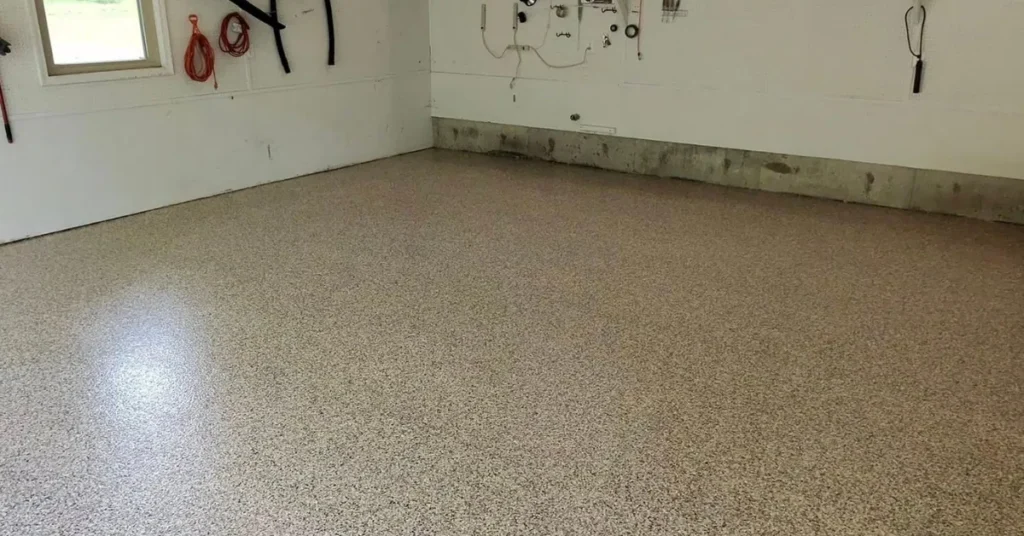
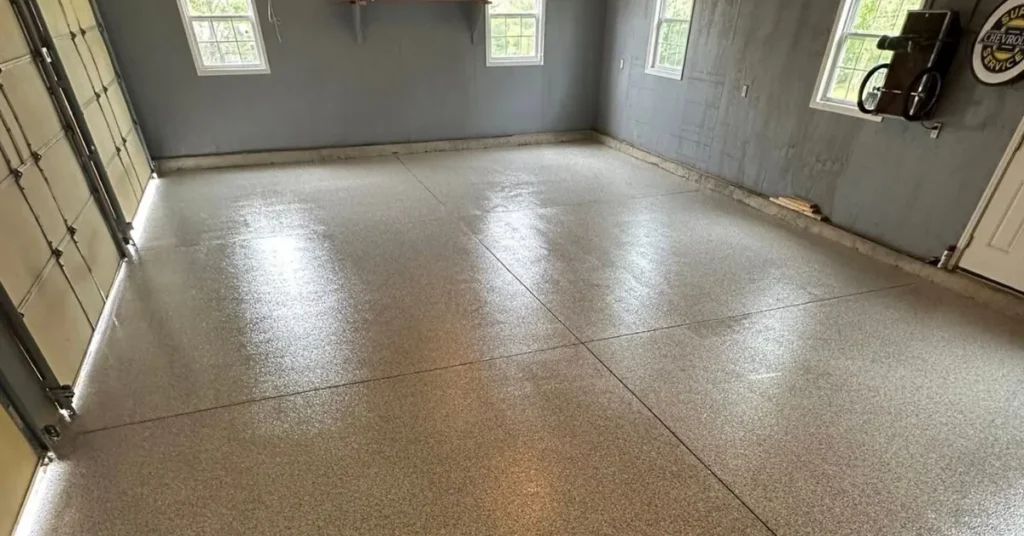
Bare concrete basement floors look unfinished. They hold dust, show every stain, and make the space feel like a utility area regardless of what you put in it. A flake epoxy floor transforms the basement into a space that looks intentional and clean.
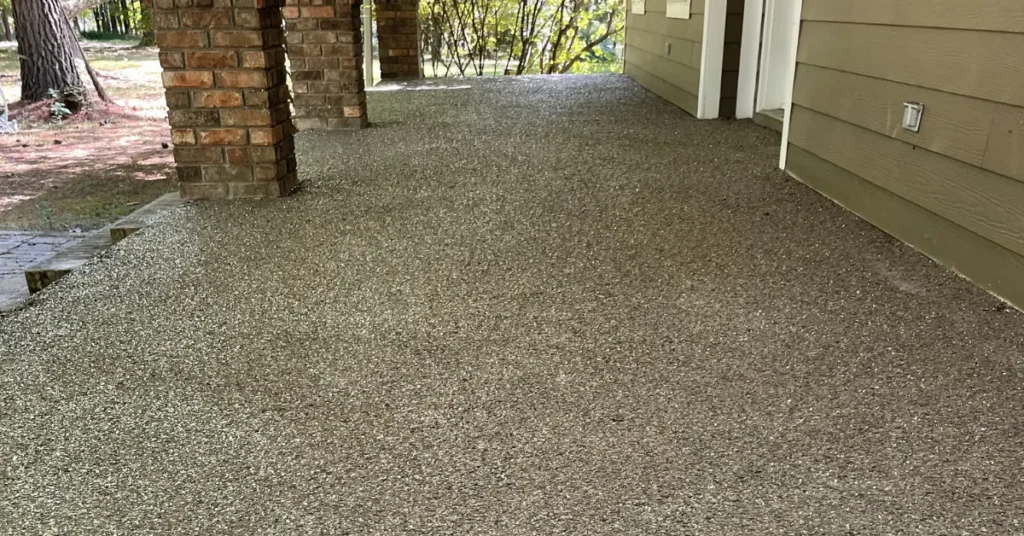
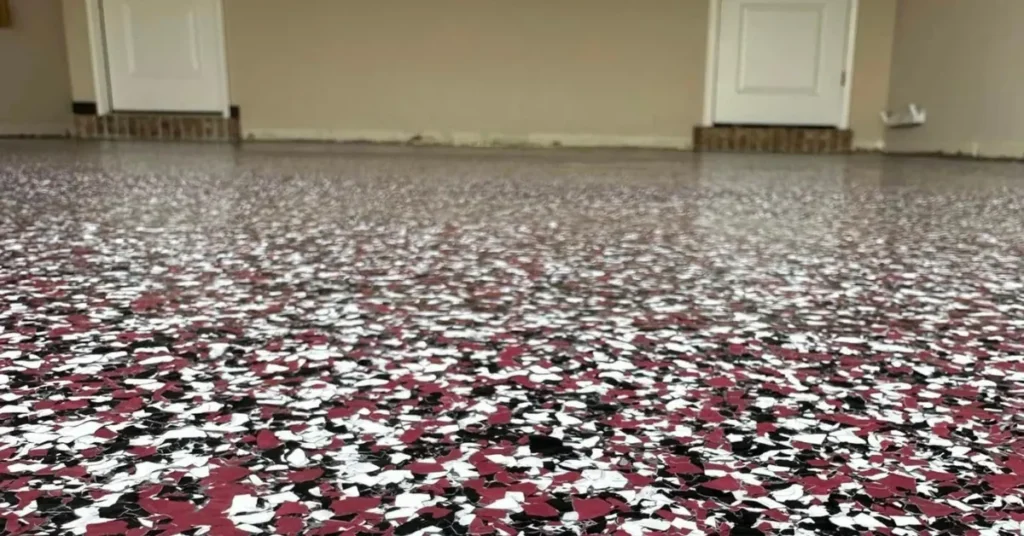
The color options available through flake systems are wide. Neutral gray blends work well for basements being used as living or recreation spaces. Brighter or bolder blends make the space feel more energized. The choice is entirely based on how the basement is being used and what the homeowner wants.
Easier Maintenance
A coated basement floor is far easier to maintain than bare concrete. The non-porous surface does not absorb dust, spills, or tracked-in debris. Sweep or mop to clean. Spills wipe up without staining. The floor stays cleaner with less effort.
For basements used as workshops, rec rooms, home gyms, or storage areas, this ease of maintenance has real daily value.
Moisture Resistance at the Surface
Even with proper moisture testing and a vapor barrier installed where needed, basements can experience condensation and humidity that above-grade rooms do not. The polyaspartic top coat is non-porous at the surface. Light moisture, condensation, and humidity do not penetrate or damage the coating.
This is different from the moisture-through-slab issue addressed at installation. Surface moisture from humidity or minor condensation is handled by the top coat without any special intervention.
Improved Light and Space
Basements often feel dark and cramped. The reflective surface of a professionally coated floor bounces light around the space. Combined with the cleaner appearance of the coated floor, this makes the basement feel significantly larger and brighter than it does with bare concrete.
What to Watch For Before Installation
Before a basement floor can be coated, a few things need to be assessed:
- Moisture levels in the slab. A professional moisture test determines whether a vapor barrier is needed. This is not optional in a basement.
- Existing cracks and damage. Cracks in the concrete are repaired as part of the prep process. Significant structural cracks warrant a separate conversation with a foundation specialist before any coating is applied.
- Previous coatings or sealers. If the floor has been previously painted or sealed, that material needs to be removed through diamond grinding before new coating goes down.
- Standing water or active water intrusion. A coating cannot fix a basement that has an active water intrusion problem. Water coming through the walls or up through the floor in large amounts needs to be addressed at the source before coating is considered.
How Basement Floors Compare to Garage Floors
The installation process for a basement floor is largely the same as a garage floor. Diamond grinding for surface prep, crack repair, moisture testing, base coat, flake broadcast, excess flake removal, and polyaspartic top coat.
The key difference is the heightened importance of moisture assessment. Basements require more thorough moisture evaluation before installation begins. A professional contractor who understands this distinction approaches every basement project with that priority in mind.
Cure timelines are the same. Light foot traffic after 24 hours. Heavy use and furniture moved back in after 72 hours.
Basement Applications That Work Well
- Home gyms and workout spaces
- Rec rooms and entertainment areas
- Home offices
- Workshops and hobby spaces
- Laundry and utility areas
- Storage areas where a clean, sealed floor is preferred
In every one of these applications, the coated floor makes the space more functional, easier to maintain, and significantly more visually appealing than bare concrete.
FAQ’s
Can epoxy be applied over a previously painted basement floor?
Not directly. Paint needs to be removed before any professional coating system is applied. Diamond grinding removes the old paint and creates the surface profile needed for the new coating to bond properly. Applying epoxy over old paint is a setup for delamination.
What if my basement floor has cracks?
Surface cracks are repaired as part of the professional installation process using 100% solids fillers. This creates a smooth, uniform surface for the coating. Structural cracks that indicate foundation movement are a different matter and should be evaluated by a foundation specialist before the floor is coated.
My basement gets humid in summer. Will the floor hold up?
Yes. The polyaspartic top coat handles surface humidity and condensation well. The more important consideration is moisture coming up through the slab, which is addressed through testing and a vapor barrier at installation. A properly installed floor handles Missouri’s humid summers without issue.
How much does it cost to coat a basement floor?
Basement floor coating is priced the same way as garage floor coating, based on square footage. In the Cape Girardeau area, pricing starts at $6.50 per square foot for a complete epoxy and polyaspartic system. Additional prep work for moisture barriers or significant crack repair may affect the final price.
Is epoxy flooring slippery in a basement?
A flake system adds texture to the surface that improves traction compared to a smooth coating. Anti-slip additives can also be incorporated into the top coat if additional traction is a priority. Discuss this with your installer based on how the space will be used.
Ready to transform your basement? Contact Cutting Edge Epoxy for a FREE quote today.