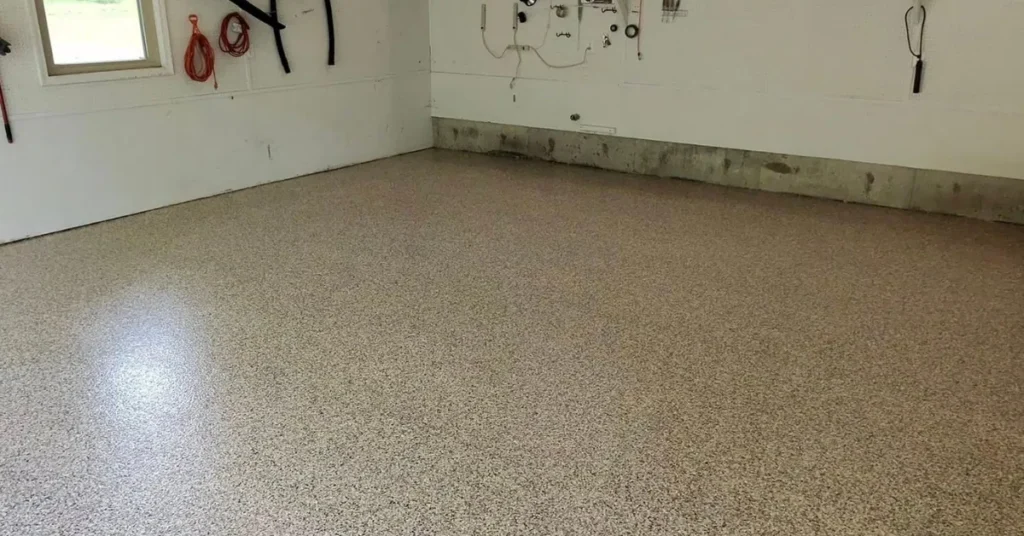
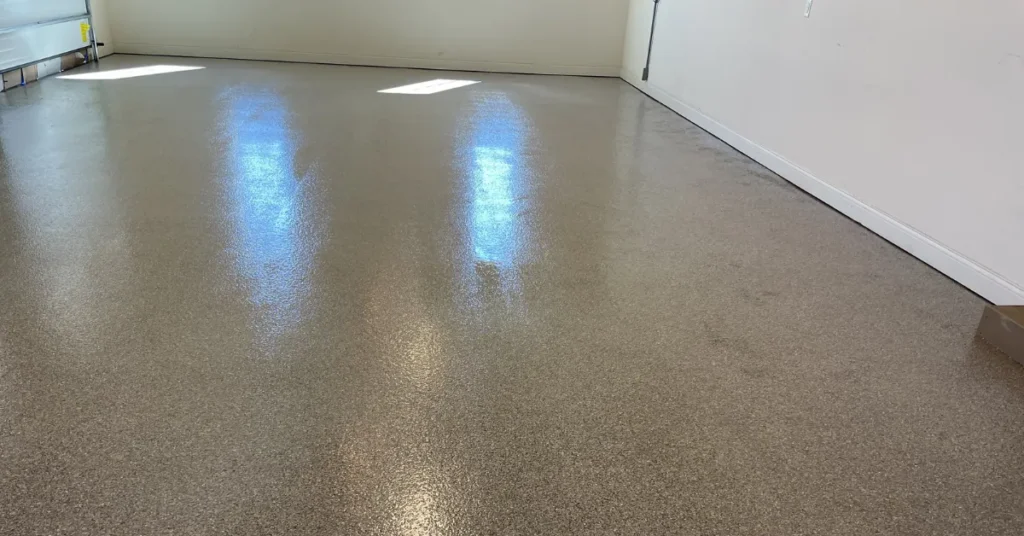
You may have heard that epoxy floors turn yellow. And you’ve probably seen it in person at some point, a floor with a distinct warm, amber tint across the whole surface that was clearly not part of the original design.
So is yellowing something that happens to all epoxy floors? Is it unavoidable?
No. Yellowing in epoxy floors is a specific, well-understood issue that results from specific conditions. Understanding why it happens makes clear why it can be prevented with the right products and the right installation approach.
Why Does Epoxy Yellow?
Epoxy is not UV stable. When exposed to direct sunlight or UV light over time, the chemical structure of the epoxy changes. This degradation causes the material to take on a yellow or amber color. The process is slow, but in spaces with consistent UV exposure, it becomes visible over time.
This is a characteristic of the epoxy material itself. It is not a defect or a sign of poor installation. It is simply what happens to epoxy when UV light hits it over an extended period.
When Does Yellowing Actually Happen?
Yellowing is most common and most noticeable in two scenarios:
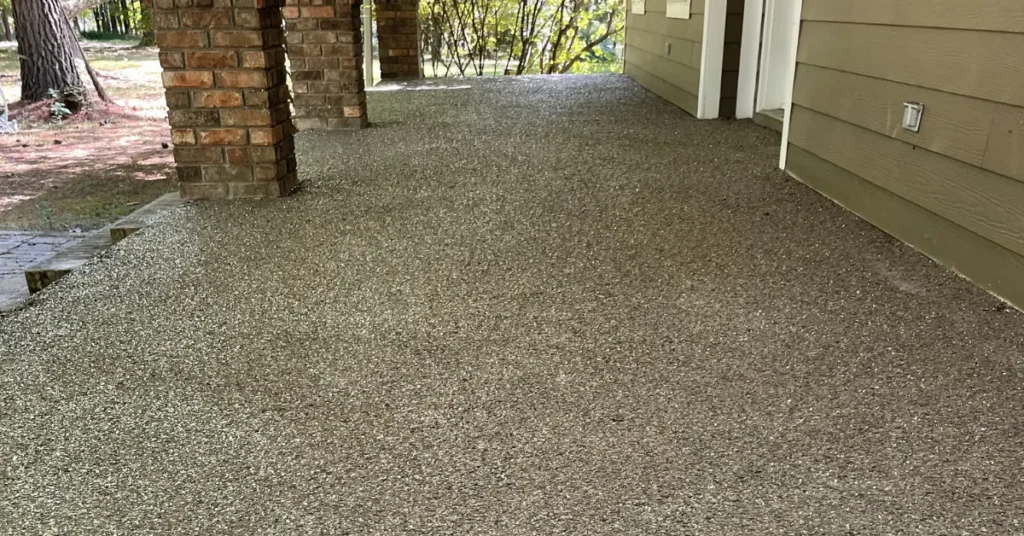
First, outdoor installations where epoxy is used as the base coat. Patios, driveways, pool decks, and any surface with direct sun exposure will cause the epoxy base coat to amber. This is why professional installers do not use epoxy as the base coat outdoors.
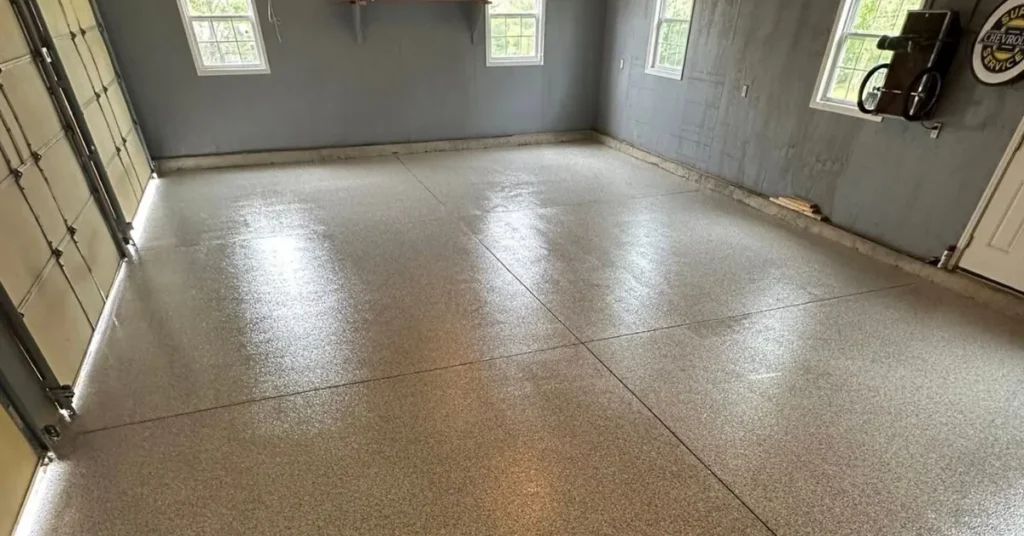
Second, indoor spaces with significant sunlight exposure. Garages with large windows, sun-facing garage doors that are frequently open, or skylights can allow enough UV light in over time to cause noticeable yellowing in an epoxy base coat.
For a typical closed or shaded indoor garage, yellowing of the base coat is much less of a concern. The UV exposure is minimal, and the process is slow enough that it is rarely visible under normal conditions.
How Do Professional Installers Prevent Yellowing?
The most effective solution is the polyaspartic top coat. Polyaspartic is UV stable. It does not amber or change color under UV exposure. Because the top coat is the layer the eye sees, a UV-stable top coat protects the appearance of the floor regardless of what the base coat does beneath it.
For outdoor surfaces, the solution goes further. Professional installers replace the epoxy base coat with a polyaspartic base coat on any surface with direct UV exposure. Polyaspartic on both layers means the entire system is UV stable from bottom to top. The floor does not amber regardless of how much sunlight it sees.
This is the standard for professional installation in outdoor applications. Patios, pool decks, and driveways should not use epoxy as the base coat. Using the right materials for the right environment is what prevents yellowing.
What About Fading?
Color fading is different from yellowing. Fading refers to the overall color of the floor becoming less vibrant or bleached out over time.
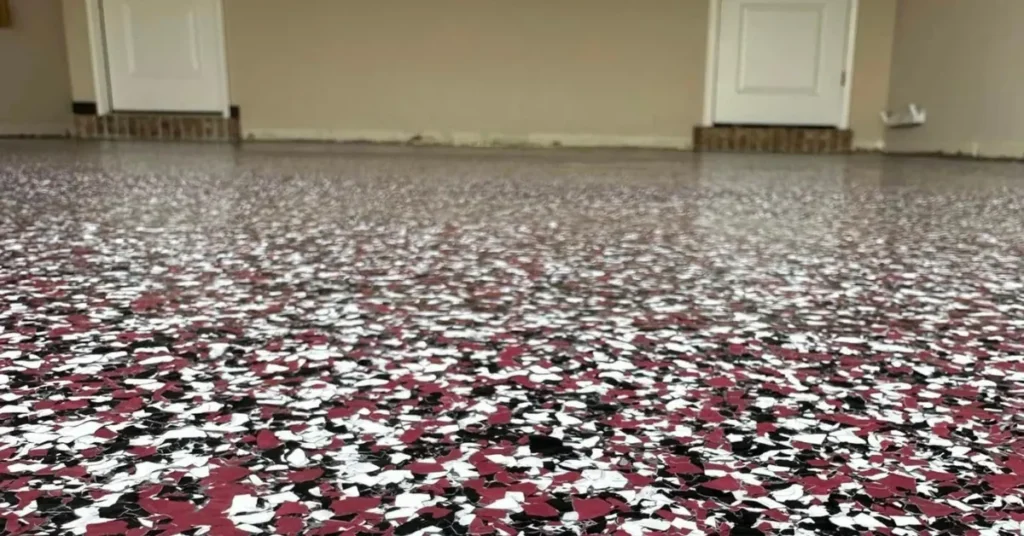
For flake systems, the decorative flakes are embedded in the base coat and sealed by the polyaspartic top coat. The top coat protects the flake color from UV degradation. A properly applied UV-stable top coat significantly slows the rate of color fading over time.
In outdoor applications, some color change over many years is realistic. The degree depends on the amount of UV exposure, the quality of the top coat, and how well the floor is maintained. Indoor floors with proper UV protection in the top coat maintain their color very well over time.
What If My Floor Is Already Yellowing?
If an existing epoxy floor has already yellowed, the top coat can sometimes be refreshed. In more severe cases, particularly on outdoor surfaces or floors where the base coat has been heavily affected, a complete removal and reinstallation may be needed.
Applying a new polyaspartic top coat over a yellowed surface can improve the appearance to a degree, but if the yellowing is in the base coat and is visible through the top coat, a surface refinish will only partially address the issue.
The best conversation to have is with a professional who can assess the specific floor and recommend the right path forward.
FAQ’s
Will my garage floor yellow if I leave the door open a lot?
If the floor has direct sun exposure through the open door for extended periods, some UV exposure is occurring. A UV-stable polyaspartic top coat significantly reduces the risk of visible yellowing under these conditions. For garages with very high sun exposure, this is worth discussing with your installer.
Can a yellowed epoxy floor be fixed without a full replacement?
In some cases, a new top coat can improve the appearance. Whether this fully addresses the yellowing depends on how deeply the discoloration has affected the system. A professional assessment is the best way to understand what options are available for a specific floor.
Does the color of the flake blend change over time?
The embedded flake, sealed under a UV-stable polyaspartic top coat, holds its color well over time for indoor floors. Outdoor surfaces with significant UV exposure may see some color change over many years, but this is gradual and much slower with quality products and proper installation.
Is polyaspartic really UV stable?
Yes. Polyaspartic is the most UV-stable of the three major coating materials. It is specifically formulated to resist the color change and degradation that UV light causes in epoxy. This is why it is used universally as the top coat in professional coating systems.
Get a floor that keeps its color year after year. Contact Cutting Edge Epoxy for a FREE quote today.